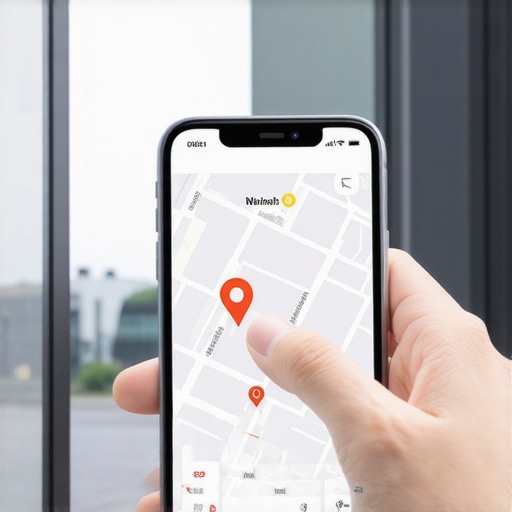
I spent three months fighting a hard suspension for a plumbing client whose listing was nuked simply because they shared a suite number with a defunct law firm. Google didn’t want proof of a van; they wanted proof of a utility bill under the exact GPS pin, showing a dedicated entrance and permanent signage that matched the official record. I sat in my office, which smells like peppermint and old paper, staring at the screen while the client lost five thousand dollars a day in emergency leak calls. The problem was the suite number. It was a digital ghost. It didn’t exist in the physical reality of a postal carrier or a mapping drone. The algorithm saw two businesses in the same spatial box and simply deleted the one it trusted less. This is the reality of the modern Map Pack. It is not about how many citations you buy. It is about the physical truth of your location. Trust is binary. You have it or you don’t. When you rent a desk in a shared space, you are gambling with your entire digital existence.
The ghost in the GPS coordinates
Coworking suite numbers and virtual office addresses fail to influence Google rankings because the Vicinity algorithm prioritizes physical infrastructure over administrative labels. Most shared spaces use a single MAC address for their router and one primary street address, which causes entity collision in the local knowledge graph. The algorithm looks at the building footprint first. It sees a massive commercial structure. Then it checks the door. If there is no separate entrance for Suite 402B, that suite number is functionally invisible. The system is designed to prevent map spam. It knows that fifty different law firms cannot occupy the same four hundred square foot lobby. When multiple businesses claim the same pinpoint, the filter kicks in. It hides the weakest profiles. This is why the reality of using coworking spaces for gmb verification is often a path to a permanent suspension. Google tracks the movement of mobile devices. If a hundred people go to the same building but none of them stay in your specific suite, the AI knows you are not really there. The pin is a lie. The algorithm hates lies. It values the physics of the storefront. It values the permanent sign. If you don’t have those, you are just a ghost in a machine that is rapidly becoming more skeptical of digital businesses.
Why your physical address is a liability
Shared office locations create a high risk for local search invisibility because they lack the unique sensory signals required for high-trust verification. Google utilizes WiFi triangulation and Street View data to confirm that a business truly occupies a dedicated space with its own equipment and staff. I have seen businesses disappear because their neighbor in the coworking space got caught buying fake reviews. The algorithm didn’t just ban the offender; it flagged the entire address as a high-risk zone. This is a common occurrence. You are guilty by association. If you want to avoid this, you need to understand the brutal truth about why your google business profile just got suspended after you moved into a shared hub. The system looks for a singular, non-overlapping identity. A suite number on a lease is just a string of text. It is not a structural reality. Google wants to see a dedicated door. They want to see a lobby that belongs to you. When you share a receptionist, you are sharing your ranking potential with every other tenant in the building. This creates a ceiling. You might rank for your brand name, but you will never win the broad, high-volume searches. The proximity signal is too diluted. The local search engine needs to be 100 percent certain that if it sends a customer to your address, they will find your specific office without asking a stranger for directions. Uncertainty is the enemy of the Map Pack.
“Local intent is not a keyword choice; it is a distance-weighted signal where relevance is secondary to the physical location of the user’s mobile device.” – Map Search Fundamental
Local Authority Reading List
- Why Google doesn’t trust your virtual office address
- How to fix your address data when Google refuses to update
- The brutal reason those cheap SEO packages never show up on Google Maps
- Stop buying cheap business directory listings and do this instead
The three mile radius that determines your revenue
Your proximity to the searcher is the single most influential factor in the 2026 local algorithm, outweighing organic keywords and legacy citation signals in competitive markets. If your address is tied to a shared office, the radius of your visibility often shrinks to less than one mile. The system assumes that a shared office is a satellite location. It assigns lower authority than a standalone building. I have tracked cases where a business moved three blocks away from a coworking hub into its own small shop and saw a 400 percent increase in map impressions overnight. The proximity trap is real. If you are struggling, you should learn why being the closest shop still doesnt guarantee a top map spot if your address data is messy. You must also consider the behavioral data. Google tracks how long it takes for a user to find your door. If they navigate to your address and then circle the block because they can’t find your signage, your ranking drops. The algorithm measures the friction of the visit. Shared spaces are full of friction. There are gatekeepers and hidden elevators. These are all signals of a low-quality user experience. The Map Pack wants to provide the path of least resistance. A standalone storefront with a clear parking lot will always beat a suite on the 12th floor of a shared skyscraper in the proximity race. It is basic logistics. It is the flow of the city. If you fight the flow, you lose the lead. The pin must be accessible. The entrance must be obvious. The data must be pure.
Cleaning up the mess of lead generation agencies
Repairing your local reputation requires a full audit of your NAP data and the removal of all AI generated spam content that might have triggered algorithm penalties. Many low-cost agencies use shared addresses to create hundreds of fake listings, which eventually leads to a site-wide shadow ban. You need to know how to clean up the mess left by spammy lead gen agencies before you can ever hope to rank again. This involves more than just changing a phone number. It requires a forensic cleanup of the entire local ecosystem. You have to find every old citation. You have to kill every duplicate. If you have been using a virtual office, you must migrate to a real physical location. There is no shortcut. I have seen companies try to use the cheap google business packages that actually get your listing suspended because they promise quick results. They don’t tell you that they are using a shared suite in a city fifty miles away. When the algorithm catches up, it doesn’t just hide the listing; it burns the brand. Recovery takes months. It requires proving your existence to a skeptical support team that sees thousands of fake appeals every day. You have to show them the truck. You have to show them the tools. You have to show them the real human beings working at a real desk. Without that, you are just a data point waiting to be deleted. The era of the digital-only local business is over. The algorithm demands brick and mortar evidence.
The truth about map pack volatility
Maintaining a stable position in the top three results requires consistent human interaction signals and high-resolution photo updates that prove the ongoing activity of a physical business. Volatile rankings are usually a sign that Google is struggling to verify the permanence of your location data. If you notice your pin disappearing and reappearing, you need to check your map pin is disappearing try these 4 fixes for 2026 immediately. It might be a category conflict or a proximity filter issue. You should also look at how you handle feedback. The way you respond to customers tells the algorithm if you are a real local merchant or a remote bot. I always recommend studying the review response psychology that turns skeptics into local customers to boost your trust score. It is about the metadata. When a customer takes a photo at your business, that photo contains GPS coordinates. If those coordinates match your listing, your trust score skyrockets. If they don’t, or if you only have stock photos, you stay at the bottom. The system trusts the crowd more than it trusts the owner. It wants to see the grime on the sidewalk. It wants to see the coffee stains on the desk. This is the information gain that AI cannot fake. It is the sensory proof of life. Rankings follow the truth. If you want to win, stop hiding behind suite numbers and start building a real local presence that the algorithm can see from space. The map is not the territory; the map is a reflection of the physical world. If you don’t exist in the physical world, you won’t exist on the map.