Why Your Business is Missing From Local Mobile Searches
The pin moved. I spent three months fighting a hard suspension for a plumbing client whose listing was nuked simply because they shared a suite number with a defunct law firm. Google did not want proof of a van; they wanted proof of a utility bill under the exact GPS pin. As a logistics manager of local data, I saw the supply chain of their leads dry up overnight. The map is not a directory. It is a dispatch system where every meter of distance and every byte of verification determines if your trucks stay busy or stay parked. I have spent two decades investigating map spam, and I can tell you that the algorithm treats your business like a logistics asset. If the data is not pure, the asset is discarded. This is the reality of the hyper local layer. If you are not appearing on a mobile device three blocks away, it is because your proximity beacon is broken.
The ghost in the GPS coordinates
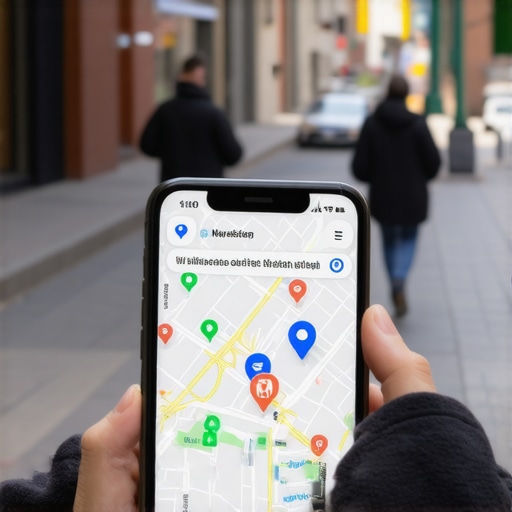
Mobile local searches prioritize proximity, relevance, and prominence through the Google Business Profile interface. Visibility drops occur when your physical location data conflicts with third party citations or when your primary category no longer matches the user intent in your specific geographic centroid. This is the fundamental math of the map pack. When a user stands on a street corner and searches for a service, Google calculates the distance from that specific latitudinal and longitudinal point. If your data indicates a mismatch, the engine redirects that traffic to a competitor. You need to understand why proximity still beats budget and how to reclaim your neighborhood ranking before you spend another dollar on traditional advertising. The algorithm is looking for a physical anchor. If your anchor is floating, your ranking is sinking. This is often caused by a service area polygon that is too wide, which dilutes the signal to the center point.
“Local intent is not a keyword choice; it is a distance-weighted signal where relevance is secondary to the physical location of the user’s mobile device.” – Map Search Fundamentals
Why your physical address is a liability
A business address becomes a liability when it is associated with shared workspaces, virtual offices, or inconsistent formatting across the web. Google requires a unique physical footprint to establish trust and will suppress listings that share data points with unrelated or suspended entities. I have seen companies lose everything because they moved one suite over and forgot to update their utility records. This is why how to clean up your address across the web to boost local trust is the first step in any recovery. If you have recently changed locations, you are likely suffering from a split authority. Part of the map logic still sees you at the old shop. The other part sees you at the new one. This fragmentation kills your prominence score. You must implement seo services to fix gmb ranking loss after address change to merge these identities. Think of it as a logistics reroute. If the mail cannot find you, the algorithm will not find you either. This includes auditing every single old directory entry that still points to your previous doorstep.
The three mile radius that determines your revenue
Google limits the visibility of most service businesses to a specific radius around their verified address to prevent map spam. When your ranking vanishes outside this circle, it indicates a proximity based ranking drop caused by a lack of local relevance signals or poor citation health. We call this the dead zone. You might rank at the top of the street but disappear when you cross the bridge. To fix this, you need local seo services to recover from proximity based ranking drop. The logistics of this involve building local justifications. This means your website needs to mention local landmarks, cross streets, and neighborhoods. You are building a digital map that mirrors the physical one. If you have expanded recently, you will face volatility. You need local seo services to stabilize volatile map rankings after expansion to ensure your new territory does not cannibalize your original home base. The algorithm hates ambiguity. It wants to know exactly where your service fleet ends its day.
Local Authority Reading List
- The no nonsense GMB toolkit every service business needs
- Why your citation profile is a mess and how to fix it fast
- How to audit your local map presence like a professional agency
- The every service business toolkit for dominating local maps
- The map tracking setup that actually tells you where your customers are
The manual audit moves that software always misses
Professional GMB audits identify hidden data conflicts such as duplicate profiles, incorrect category associations, and broken map pins that automated tools often overlook. A manual review of the suggested edits and user contributed data is required to ensure long term listing stability. I always tell my team that tools are just sensors; the logistics manager makes the decision. You can use how to audit gmb profile with a toolkit but you must look at the actual street view imagery. Does the sign on the building match the name on the profile? If not, a competitor can report you in seconds. If you find yourself buried in search results, start by using tools to fix low gmb rankings to identify where the data leak is happening. Often, it is a simple matter of fixing your business name and phone number inconsistencies for good. These inconsistencies act like friction in a supply chain. They slow down the speed of trust. When trust slows down, your ranking falls.
Broken redirects and the 404 ghost
A local ranking can collapse if the website linked to the Google Business Profile contains broken redirects or 404 errors. Google views the landing page as a critical part of the local entity and will penalize profiles that lead users to a dead digital end. This is a logistics failure of the highest order. If the bridge is out, the trucks stop. You need seo services to fix broken redirects and 404 errors immediately. The local algorithm crawls your site to verify the information on your profile. If it hits a wall, it assumes the business is closed. We often see this when owners try to clean up their digital footprint. They delete old pages but forget to point the old traffic to the new home. You must also implement local seo services to clean up old or closed locations to prevent these ghosts from haunting your current ranking. A clean site is a clear signal. A clear signal is a high ranking.
The weight of a local review
Review sentiment and local reviewer status provide geographic proof of a business’s operations. Reviews from users who are frequent travelers in your specific city carry more weight than generic feedback from accounts with no local history. This is the behavioral zooming aspect of the algorithm. Google knows where the reviewer is. If they are in your shop, the review is gold. If they are in another country, it is a red flag. This is why reputation management and review repair services are not just about deleting bad words. They are about building a local trust graph. You should be using the exact review script that forces google to show your best testimonials to prompt customers to mention specific services and locations. This creates a semantic connection between your business and the physical geography. It is the ultimate proof that you exist where you say you do.
The invisible tether of the service area
Service Area Businesses must define their boundaries using specific zip codes or city names to avoid competing with their own physical location signals. Overlapping service areas or hidden addresses that conflict with local search intent will cause a profile to vanish from the map pack. I have seen businesses fail because they tried to cover a three state area from a single garage. The algorithm sees this as a logistics impossibility. You must use local seo tools to optimize google business profile listing settings to reflect the actual territory your workers can reach in a reasonable time. If you have multiple locations, you must ensure they do not overlap. Read about why google thinks your two locations are the same and how to fix it to avoid being filtered out. The map is a finite grid. There is only room for the most relevant and physically logical providers at the top. If your logistics do not make sense, your ranking will not either.
“Proximity is the strongest ranking signal in local search, often outweighing both relevance and prominence in high density urban environments.” – Local Search Association Whitepaper
Stabilizing the volatile map pack
Volatility in map rankings is usually a symptom of inconsistent data across the primary aggregators or a sudden influx of unverified user edits. Maintaining a stable position requires constant monitoring of citation health and real time response to profile changes. I monitor the grid like a dispatch board. If a competitor changes their name to include keywords, they are gaming the system. You need the best ways to monitor map competitors without looking like a bot to stay ahead. When your ranking drops, it is usually because a signal was lost. Use the first three things to check when your local rankings tank to diagnose the failure point. Is it a broken link? Is it a new competitor? Or did Google just update the radius? Consistency is the only antidote to volatility. You must maintain your citation cleanup services for local businesses throughout the year. It is not a one time task. It is a maintenance schedule for your digital fleet. Keep the data clean and the leads will follow.