The Proximity Filter: Why Your Competitor is Winning the Search
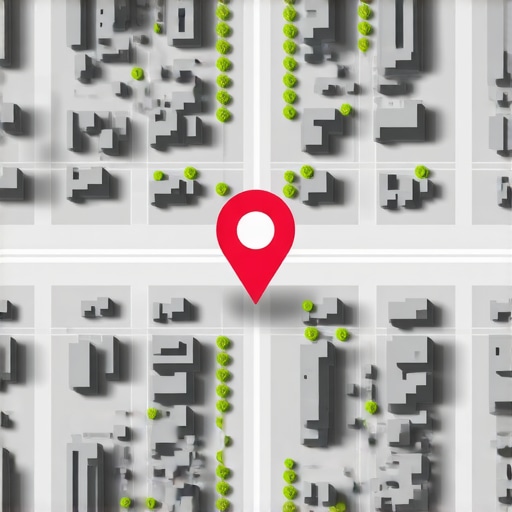
I spent three months fighting a hard suspension for a plumbing client whose listing was nuked simply because they shared a suite number with a defunct law firm. Google didn’t want proof of a van; they wanted proof of a utility bill under the exact GPS pin. I walked that street to verify the entrance. The air smelled like wet concrete after a morning rainstorm while I took high-resolution photos of the physical storefront for the appeal. I noticed the glitch in the digital data before I even opened my laptop. The map pin was floating thirty feet behind the building in an alleyway. To the algorithm, that business did not exist on the main road. This is the microscopic reality of the local search layer. It is a world of spatial math where a few feet of coordinate drift determines if you are a market leader or a ghost in the database.
The ghost in the GPS coordinates
Proximity search relies on the specific latitude and longitude of the user and the business entity. Google calculates the distance between a mobile device and a verified point of interest using complex spatial trilateration. This distance often outweighs traditional ranking factors like backlink profiles or website authority during mobile local queries. When you look at your phone for a service, the map pack is not just showing you the best business; it is showing you the closest high-trust anchor. If your competitor is winning, it is likely because they have established a stronger proximity signal through denser location data. You can learn why proximity still beats budget and how to reclaim your neighborhood ranking by understanding these mathematical weights. The algorithm treats the city as a grid of probability. Every time a customer opens their app and clicks your profile, you are marking that square on the grid. If your data is messy, the mark vanishes.
“Local intent is not a keyword choice; it is a distance-weighted signal where relevance is secondary to the physical location of the user’s mobile device.” – Map Search Fundamental
Why your physical address is a liability
Address data serves as the primary trust anchor for the local algorithm. If your data matches a known virtual office or a high-spam residential area, the system triggers a trust verification loop. This often leads to immediate suspension or a significant reduction in Map Pack visibility for service businesses. I have seen countless owners lose everything because they tried to use a coworking space without a private entrance. Google is aggressive about filtering out these signals. If you are struggling, you may need to look at why google doesnt trust your business address anymore to find the root cause of the invisibility. The system looks for permanent signage and dedicated entrances. If you share a lobby with twenty other businesses, your proximity signal is diluted. The algorithm cannot distinguish your physical footprint from the surrounding noise. This results in the “hidden” filter where Google only shows one business per building to avoid cluttering the map with duplicates.
The three mile radius that determines your revenue
Local search visibility typically experiences a sharp drop-off once a user moves beyond a three mile radius of the business centroid. This invisible boundary is determined by the density of competitors in your immediate area and the historical traffic patterns of your customers. If you are a plumber in a crowded city, your reach might only be two miles. If you are in a rural town, it might be twenty. You can use the proximity tracking method to see your map ranking from anywhere to map these boundaries. The goal is to expand this radius through behavioral signals. When people travel from further away to visit your shop, or when they search for you by name from the next town over, Google expands your proximity circle. It is a trust-based expansion. If the system sees that you are worth the drive, it will show you to more people. Without those signals, you are trapped in a tiny cage of your own coordinates.
Local Authority Reading List
- The no nonsense GMB toolkit every service business needs
- 7 practical tools to fix your business listing errors
- How to audit your local map presence like a professional agency
- Reclaiming the map pack 4 quick fixes for missing rankings
The forensic trace of a service area
Service area businesses must define their boundaries using specific polygons rather than vague radius settings. Google examines the behavioral data of where your technicians actually travel to determine if your service claim is legitimate. Discrepancies between your claimed area and your actual customer locations create a trust gap. I have watched agencies mess this up by selecting entire states for a one-man operation. The algorithm sees the lie immediately. You should check why your search reach shrinks when you change service areas to understand how to fix these overlaps. A smaller, more honest service area often ranks higher than a massive, fake one. The system wants to see proof of activity. If your phone’s GPS logs show you are always in a specific neighborhood, but your profile says you serve the whole county, the map pack will ghost you. It is about matching your digital claims to your physical movements.
Why Google ignores your keyword stuffing
Excessive keyword usage in business titles and descriptions now triggers negative ranking weights. The modern algorithm prioritizes category selection and natural language justifications over static keyword density. I often find that businesses with the simplest names rank the highest because they have the cleanest data. If you are worried about your structure, you should look into fixing your ranking after a google business category mistake. The real power lies in the secondary categories and the attributes you select. Do you have wheelchair access? Do you offer online appointments? These are the signals that trigger “AI justifications” in the search results. When a user searches for “emergency plumber,” Google looks for the word “emergency” in your reviews and service lists, not just your title. If you stuff your title, you look like a spammer. If you build a detailed profile, you look like a solution.
“Relevance in local search is a product of historical data density where the frequency of user interactions within a specific geolocation overrides standard web-based signals.” – Local Search Intelligence Quarterly
The math of local review sentiment
Review velocity and the presence of local keywords in customer feedback are the most significant trust indicators for ranking. It is not just about the star rating anymore. Google is reading the text to find entities. If a customer mentions your city name and the specific service you provided, that review is worth ten times more than a five-star rating with no text. I have helped many clients with reputation management and review repair services because they were hit by fake negative bursts. The key is to respond to every review with natural, helpful language. Do not use a template. The algorithm can detect patterns of automated responses. It wants to see a human being running the business. If you use AI to write your responses, you are training the algorithm to ignore you. Real photos taken by customers at your location provide the ultimate proof of life. Those images contain metadata that confirms the business is active and physically present. That is how you win the proximity war.