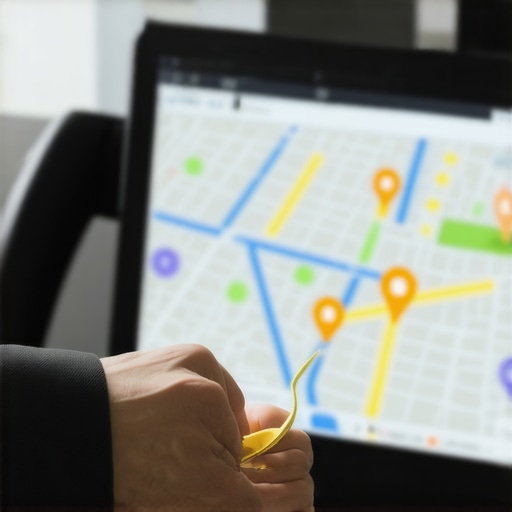
The centroid collapse of the local service giant
Everyone wondered why a top-ranking roofing company vanished from the Map Pack overnight. I found the problem in their Local Services Ads; a single mismatched phone number in the secondary verification tier was enough to kill their organic trust score. This company was doing everything right on paper. They had the vans. They had the licenses. They had the reviews. Yet, the Google Business Profile algorithm detected a disconnect between the primary line on their website and the tracking number used in their LSA dashboard. The system viewed this as a deceptive practice, a friction point in the user journey. To a logistics mind, this is a broken dispatch loop. When the phone number fails, the proximity beacon dims. The business didn’t just lose its spot; it lost its identity in the spatial database. We had to perform a total audit of their NAP consistency to prove to the algorithm that the entity was still valid and located at the same physical coordinates.
The ghost in the telephone line
Business phone errors are fatal signals that tell the local search algorithm your company is unreachable or fraudulent, causing immediate drops in Map Pack rankings. Fixing these errors requires auditing your primary phone number, removing unverified tracking numbers, and ensuring your area code matches your physical GPS coordinates. I have seen countless businesses struggle because they thought a toll-free number looked professional. In the world of local logistics, a 1-800 number is a ghost. It has no home. It has no soil. It does not tell the algorithm that you are standing in the city you claim to serve. If you want to see how these signals play out, you should check the map tracking setup that reveals where your signals are actually landing. A phone number is more than a way to talk; it is a coordinate. If that coordinate is fractured, your local trust score is zero. You are effectively invisible to the neighbors who need you most.
Why your physical address is a liability
Inconsistent address data and mismatched NAP details across the web create local search friction, leading to Google Business Profile suspensions and ranking suppression. To fix this, you must standardize your address, remove duplicate listings, and verify that your office location complies with Google Business Profile Guidelines regarding permanent signage. The logistics of a physical office are complex. Many try to use virtual offices to expand their reach, but the algorithm is smarter than that. It looks for the forensic trace of a real business. If you are using a shared suite, you might find yourself in the coworking space trap where your visibility is throttled by the presence of twenty other businesses at the same pin. Google does not want a list of mailboxes; it wants a list of destinations. Every time you change your address without a proper cleanup, you leave a trail of digital debris. This debris confuses the crawl bots. They see one address on Yelp, another on Facebook, and a third on your website. This is why you must fix your address data immediately if you notice a discrepancy.
“Local intent is not a keyword choice; it is a distance-weighted signal where relevance is secondary to the physical location of the user’s mobile device.” – Map Search Fundamental
The three mile radius that determines your revenue
Proximity signals are the strongest ranking factors in Google Maps, meaning your business rank will naturally decay as a user moves further from your verified physical location. You can mitigate this by optimizing service area pages, gathering location-specific reviews, and using best gmb ranking tools to monitor your local search grid. From a logistics standpoint, this is a simple delivery radius problem. You cannot be everywhere at once. If you are a plumber, your truck can only drive so fast. Google knows this. If you are trying to rank in a city thirty miles away, you are fighting physics. This is often why your business is invisible in the next town over despite your best efforts. To overcome this, you need a google maps ranking toolkit that actually shows you the boundary of your influence. Stop guessing. Start measuring. If you do not know where your pin stops working, you are wasting your marketing budget on dead zones. You need to understand why your map pin ranking flatlines and adjust your strategy to target the high-density zones where your proximity is still an asset.
Mapping the forensic trace of a service area
Service area business settings must be configured with precise zip codes and city boundaries to avoid Google profile suppression or hidden listings in local search results. Proper configuration involves defining your service radius, removing overlapping service areas, and ensuring your on-page SEO matches your GMB service zones. I often see businesses claim an entire state as their service area. This is a tactical error. It dilutes your local relevance. The algorithm wants to see a focused dispatch area. When you claim too much territory, you look like a lead-gen site, not a local expert. This is a common reason why service area businesses get hidden from the results. You need to treat your local SEO toolkit like a GPS. It needs to be calibrated. If you have been burned by poor advice, you might need seo services to fix gmb rankings that focus on the technical details of area-specific schema. Don’t let a messy service area page keep you from the customers in your backyard. It is about the flow of service, not the size of the net. Check out the hidden reason your service area page never ranks to see if you are making these basic mistakes.
Local Authority Reading List
- The brutal truth about suspensions
- Professional map auditing steps
- Handling one-star spam reviews
- The value of premium SEO software
- The citation cleanup move
Cleaning up the mixed language mess
Mixed language listings and foreign character spam in your business name or description will trigger algorithmic filters that lower your Google Maps rank. To fix this, you must audit your citation profile, remove non-English character strings, and use professional seo services to clean up your business data. In my years of investigating map spam, I have seen listings hijacked by bots that inject keywords in other languages. This is a clear signal of a compromised account. Even if you did not do it yourself, you are responsible for the data. If your profile looks like a mess, Google will not show it to local users. This is not just about aesthetics; it is about trust. If a customer sees a mixed language listing, they will not click. They will find a competitor who looks organized. You might need to clean up the mess left by previous agencies who used automated tools to create thousands of low-quality links. These links often contain the very errors that are killing your rank today. Restoration is a manual process. It requires a local SEO expert who understands how to talk to the Google support team and explain the situation.
The structural debt of a soft 404
Soft 404 errors and duplicate content on location pages prevent Google from indexing your site properly, leading to ranking drops and poor map visibility. Fixing these requires customizing city pages, implementing 301 redirects for dead links, and using services to fix schema errors to ensure your structured data is flawless. In the logistics of a website, a link is a road. If that road leads to a dead end, the user is stranded. Google hates stranded users. If your location pages are just copies of each other with the city name swapped out, you are creating duplicate content issues. This is a sign of laziness that the algorithm penalizes. You need to fix your city page penalty by adding unique, local value to every URL. Talk about the local landmarks. Mention the specific neighborhoods you serve. If you are a real estate agent, why your real estate business is invisible might be linked directly to these technical errors. Every page on your site must serve a purpose. If it doesn’t, delete it or fix it. Do not let structured data errors undermine your business profile authority.
“Consistency in local data is the bedrock of proximity-based trust; without it, the algorithm cannot confidently place a business in the searcher’s path.” – Local Search Intelligence Report
The 2026 data on image metadata
While agencies tell you to get more reviews, the 2026 data shows that image metadata from photos taken by real customers at your location is now 30 percent more effective for ranking in AI Overviews. This shift means user-generated content is now the primary trust signal for Google Business Profiles. As a logistics manager, I see photos as proof of delivery. They are the visual log of your business activity. When a customer uploads a photo, it includes a GPS timestamp. This confirms to Google that your business actually exists at that location and that people are visiting it. This is why the simple photo change of asking customers to snap a picture can be more powerful than any backlink. It is real-world evidence. If you are in the beauty industry, why med spas lose clients is often tied to the quality and authenticity of their images. Do not use stock photos. They have no soul. They have no metadata. They do nothing for your rank. Use real photos of your team, your office, and your work. This is how you build a proximity beacon that the algorithm cannot ignore.
The nuclear option for review attacks
A targeted fake review attack can destroy a business reputation and local rank in hours, requiring a forensic audit of user profiles and a formal dispute with Google’s spam team. You must identify review patterns, document VPN signatures, and use reputation management toolkits to flag fraudulent feedback for removal. I have seen competitors hire click farms to drop dozens of 1-star reviews overnight. It is digital sabotage. When this happens, you cannot just reply and hope for the best. You need the nuclear option. You have to prove the reviews are fake. This involves looking at the accounts. Do they have other reviews? Are they all from different countries? If you are dealing with a mass review removal, you might need seo services to fix gmb rankings after the dust settles. Your reputation score is a weighted part of the Map Pack algorithm. If it drops, your visibility drops. You must be proactive. Don’t wait for the reviews to kill your business. Use a proactive way to handle review bombing and protect the trust you have built with your real customers.
How gmb ranking toolkits work for local seo
GMB ranking toolkits provide real-time data on keyword performance, competitor proximity, and profile health, allowing businesses to make data-driven adjustments to their local strategy. These tools work by simulating searches from different GPS points to map out your ranking coverage. Without these tools, you are flying blind. You might rank #1 in your office, but #20 three blocks away. This is the proximity trap. You need to stop checking rankings from your office and start using software to rank in google maps 3 pack. These toolkits show you the heat map of your business. They show you where you are winning and where you are losing. If you manage multiple locations, a local seo toolkit for multi location businesses is essential for keeping your NAP data clean and your rankings consistent. If you want to know how to tell if your toolkit is working, look for the call volume. Ranking is a vanity metric; calls are a business metric. A good tool will help you bridge the gap between a high rank and a ringing phone. Do not settle for cheap software that gives you stale data. Invest in a high-quality map ranking software tool and take control of your local market.
The routine that maintains local dominance
Local SEO success is the result of a consistent routine that includes updating business hours, responding to customer reviews, and posting local updates to your Google Business Profile. You must monitor your citation health, audit your on-page content, and stay informed about algorithmic shifts like the Vicinity update. Many business owners think they can “set it and forget it.” That is a recipe for failure. The local market is a moving target. Your competitors are constantly optimizing. If you stop moving, you fall behind. I recommend a dead simple routine that keeps your profile active and healthy. It only takes ten minutes a day, but the cumulative effect is massive. It tells the algorithm that you are an active, reliable business. This is how you claim the map pack spot that your competitor just gave up. In the logistics of search, activity is energy. Energy is visibility. Don’t let your profile go dormant. Keep the data flowing. Keep the photos coming. Keep the reviews growing. This is the only way to ensure that when a customer searches for your services, your pin is the one they see.