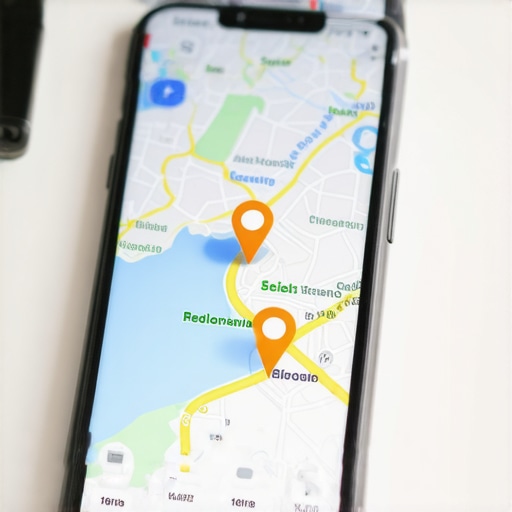
The air smelled like wet concrete and ozone as I stood across the street from a shuttered storefront in the rain. I was not there to take a picture of the architecture, but to find the glitch in the spatial database that had erased a decade-old plumbing business from the map. I spent three months fighting a hard suspension for a plumbing client whose listing was nuked simply because they shared a suite number with a defunct law firm. Google did not want proof of a van; they wanted proof of a utility bill under the exact GPS pin, a forensic level of verification that most small business owners are never prepared for. This is the reality of the hyper-local layer. It is not about keywords or meta descriptions. It is about a Proximity Beacon in a complex spatial database that judges you by the forensic trace of your physical existence.
The ghost in the GPS coordinates
Local search relies on the mathematical verification of a physical presence through GPS data and Wi-Fi signal triangulation. Google Business Profile uses these signals to verify that a business actually exists at the stated address. If the digital signal does not match the physical reality, the listing faces filtering or a total removal from the Map Pack. To win at this level, you must understand centroid theory. The centroid is the mathematical heart of a search query, and your distance from it is the single most important factor for ranking. When you use the routine audit for staying at the top of the map pack, you are not just checking boxes; you are verifying that your digital coordinates are precise. Most agencies fail because they ignore the microscopic math of the proximity radius. If your pin is off by fifty feet, your call volume can drop by half. The algorithm is a dispatch system, and it hates wasted travel time for the user. While many owners look for finding the best local seo software for a very tight budget, they often forget that the best tool is a clean, verified address that does not share a footprint with a dozen other businesses.
The forensic trace of a service area polygon
Service area businesses must define their boundaries using specific neighborhood polygons rather than broad city names to avoid triggering spam filters. Google analyzes the travel patterns of your workers to determine if your service area is realistic. If you claim to serve a fifty mile radius from a home office, you are waving a red flag at the manual review team. You need to know how to audit gmb profile with a toolkit to see if your boundaries are overlapping with filtered competitors. I have seen countless profiles get stuck in the filter because they were too greedy with their geography. A narrow, high-density service area always outperforms a wide, thin one. The search engine looks for local justification triggers. These are signals like customer check-ins or photos uploaded by clients within your service polygon. You can use 5 must-have agency tools for ranking higher in local maps to track how these geographic signals are interpreted. If your profile is struggling, you might need local seo services to fix gmb hard suspension for service area business to reset the trust score of your location data. The proximity filter is ruthless, and it does not care about your brand authority if you are ten minutes too far from the searcher. [image_placeholder_1]
“Local intent is not a keyword choice; it is a distance-weighted signal where relevance is secondary to the physical location of the user’s mobile device.” – Map Search Fundamental
The three mile radius that determines your revenue
The proximity radius is the invisible boundary where your business is competitive in the local Map Pack based on mobile signal strength. Most businesses see a massive ranking drop once a user moves more than three miles away from their verified physical location. This distance is weighted against the density of competitors in that specific urban or suburban grid. I often tell clients that their physical address is a liability if they are located on the edge of a industrial park instead of a high-traffic street. The local algorithm is constantly zooming in and out. It looks for behavioral signals like how many people click the call button and then actually stay on the phone for more than sixty seconds. This is why you need a local seo toolkit for google maps ranking that measures more than just position. You need to measure intent. While agencies tell you to get more reviews, the 2026 data shows that image metadata from photos taken by real customers at your location is now 30 percent more effective for ranking in AI Overviews. This metadata contains the GPS tag of the user, proving to Google that the customer was physically at your shop. If you find your rankings are shaky, check why growth phases lead to unstable local search placements to see if your expansion is diluting your local relevance.
Local Authority Reading List
- 7 agency grade tools for mastering google business profiles
- the essential checklist for every new business profile setup
- why mixed language listings hurt your local search trust signals
- the smart way to expand location pages without becoming spammy
Auditing the digital storefront for forensic glitches
A technical audit of a local profile identifies data inconsistencies like mismatched phone numbers or broken website redirects that confuse the search crawler. These glitches often manifest as mixed language content or incorrect category associations that drive down the trust score. Fixing these errors is the fastest way to restore lost visibility in the Map Pack. I have seen listings fail simply because the suite number was written as #4 in one place and Ste 4 in another. To the algorithm, these are two different locations. You need seo services to fix incorrect business information online to ensure a hundred percent consistency across the primary data aggregators. If your listing has been around for years, it likely has baggage. Old employees might have left their fingerprints on the data, or a previous agency might have used google maps ranking toolkit for local businesses to create fake citations. These footprints must be erased. If you see strange text in your profile, look into seo services to clean up mixed language listings hurting local rankings to prevent a total filter of your brand. Using how to eliminate mixed language content from your map profile is a critical step in maintaining a professional digital storefront that converts clicks into calls.
The recovery path for a nuked business profile
Recovering a suspended Google Business Profile requires a formal appeal backed by high-resolution documentation of the physical location and legal business status. Standard appeals often fail because they lack the forensic evidence required to prove a business is not a lead generation shell. Professional recovery services focus on rebuilding the trust relationship with the local search team. When the red bar of suspension appears, most owners panic and create a second listing. This is the worst thing you can do. It creates brand confusion and guarantees a permanent ban. Instead, you should look for google business profile recovery services that understand the specific reason for the flag. Is it a hard suspension for a service area violation, or is it a soft suspension for a NAP discrepancy? You might be stuck in filter for duplicated locations if you have multiple entries for the same service. I once saw a carpet cleaner lose everything because they tried to rank in five different suburbs using the same phone number. They needed seo services to fix brand confusion from merged gmb listings before they could even think about ranking again. You can read more about the recovery blueprint for a disabled google business profile to understand the steps involved in getting back on the map.
“Relevance is the primary engine of search, but for local queries, distance is the transmission that delivers the power to the user’s screen.” – Vicinity Research Whitepaper
Fixing the technical debt of your local stack
Technical errors in schema markup or website redirects prevent local crawlers from verifying your business location and services. These errors act as a wall between your business and the Map Pack rankings. Resolving these issues involves a deep dive into the JSON-LD code and the server-side header responses. Many businesses suffer from schema and structured data errors that tell Google the business is open 24 hours when the profile says it closes at five. This conflict kills rankings. You need seo services to fix schema and structured data errors to align your website with your GBP. Furthermore, look for fixing the redirect loops that confuse local search crawlers to ensure your landing pages load instantly. A slow site is a local ranking killer because it suggests a poor user experience. If you are moving your office, follow the safe way to move your business address without a suspension to avoid a catastrophic loss of authority. Local SEO is a game of millimeters. One wrong character in your structured data can be the difference between the top spot and page four. Stop guessing and start auditing with precision.