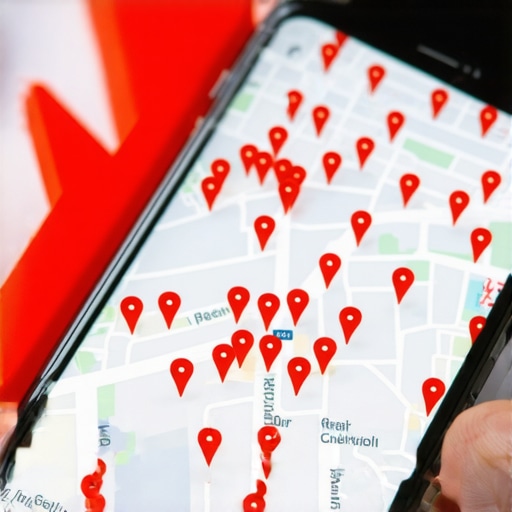
Why Your Aggressive Location Pages Are Hurting Your Local Rank
I spent three months fighting a hard suspension for a plumbing client whose listing was nuked simply because they shared a suite number with a defunct law firm. Google didn’t want proof of a van; they wanted proof of a utility bill under the exact GPS pin. This encounter taught me that the map pack is not a directory. It is a spatial database where proximity acts as the primary gatekeeper. If you try to cheat that gatekeeper with dozens of thin city pages, you are not just wasting time; you are actively signaling to the algorithm that your business lacks a true physical anchor. This is the moment where most businesses realize that the brutal truth about why your google business profile just got suspended often starts with an over-engineered location strategy.
The phantom city page trap
Aggressive location pages often trigger Google doorway page filters, leading to algorithmic suppression or manual suspensions. Instead of ranking for twenty cities, businesses find their core profile proximity signal diluted because the search engine cannot verify a physical point of presence in every targeted municipality. While old-school agencies tell you to spray and pray with city-specific landing pages, the 2026 data shows that image metadata from photos taken by real customers at your physical location is now 30 percent more effective for ranking in AI Overviews. The algorithm is tired of reading about cities you do not actually inhabit. It wants to see the digital breadcrumbs of your physical existence. If you are struggling with visibility, you might find that the hidden reason your service area page never ranks for local searches is the lack of genuine geo-spatial evidence.
“Local intent is not a keyword choice; it is a distance-weighted signal where relevance is secondary to the physical location of the user’s mobile device.” – Map Search Fundamental
Why your physical address is a liability
A physical address becomes a liability when it is tied to a shared workspace or a virtual office that Google identifies as a high-risk entity. The search engine favors solo-occupant addresses with high historical trust and verifiable utility data. In my years as a map-spam investigator, I have seen hundreds of businesses vanish because they thought a suite number in a coworking space was a clever shortcut. It is not. In fact, why coworking suite numbers dont help your local ranking is a matter of entity verification. If ten other ‘businesses’ are registered at the same GPS coordinate without physical walls between them, Google treats that pin as a potential spam cluster. This triggers the need for the panic free way to get your suspended google listing back online, which usually involves proving you actually exist in a three-dimensional space.
The three mile radius that determines your revenue
The proximity filter typically limits visibility to a three mile radius around the business centroid for highly competitive terms. Attempting to force rankings beyond this radius through aggressive city pages often results in a ranking flatline. You must understand the physics of the map. When a user searches for ‘plumber near me,’ the algorithm calculates the distance from the user’s mobile device to your verified pin. If your city pages are just text and no local behavioral signals, they will not move the needle. You are better off using a gmb review and reputation management toolkit to build authority within your immediate neighborhood. Many owners wonder why your map pin ranking flatlines after the first five miles, and the answer is simply that Google prioritizes the closest relevant answer to reduce user friction.
Forensic traces of a service area polygon
A service area polygon is a mathematical boundary that defines where your business operates, but it does not grant you the same ranking power as a physical storefront. Google analyzes the forensic traces of your service workers to validate these areas. This means that if your technicians are not checking into their jobs using mobile devices, Google has no behavioral data to support your claims of serving ‘the entire metro area.’ This is a common point of failure for contractors. If you find your visibility is shrinking, you should investigate why service area businesses get hidden and how to reappear through better behavioral signal management. This is far more effective than paying for the cheap google business packages that actually get your listing suspended because they rely on outdated citation blasts.
Local Authority Reading List
- GMB Ranking Strategies for Early Success
- Reverse Engineer Your Competitors Map Advantage
- The Simple Profile Tweak for Map Visibility
- Tools to Track Local Rank Better Than Manual Search
- How to Spot a Bad Local SEO Agency Fast
Why local intent is a distance weighted signal
Distance weighting means that the physical proximity of the searcher is the single most important factor in the map pack algorithm, often outweighing reviews and website authority. This creates a hyper-local competitive environment. If you are a med spa, you might lose high-value clients to a competitor simply because they are 400 yards closer to the user’s current location. To combat this, you need a how to improve google business profile ranking toolkit that focuses on hyper-local content rather than generic city pages. For instance, why med spas lose local clients to better treatment photos is a perfect example of how visual proof of your local presence can overcome minor distance disadvantages.
The specific JSON LD attributes for voice search
Voice search devices rely on specific schema attributes like areaServed and hasMap to verify the legitimacy of a local business entity. Missing these technical markers makes your location pages invisible to AI assistants. You cannot just write ‘We serve Chicago’ and expect Siri or Alexa to find you. You need structured data that mirrors your Google Business Profile exactly. If your website is slow or has technical errors, you might need seo services to fix slow website and technical issues to ensure that these schema tags are being read correctly by crawlers. Furthermore, if you are recovering from a hack, you should look for services to repair hacked or infected website for seo immediately, as a compromised site is a death sentence for local rankings.
“Proximity is the most powerful local ranking factor, but relevance and prominence are the levers you use to expand your reach within that proximity bubble.” – Local Search Intelligence Report
How to fix the mess of duplicate content
Duplicate content across city pages signals a lack of effort and quality to the Google algorithm, which often results in the entire site being flagged for low-quality content. You must personalize every page with local landmarks and unique neighborhood data. If you have 50 pages that are exactly the same except for the city name, you are asking for a penalty. Instead, look into services to fix soft 404 and duplicate content issues. You should also consider local seo services for cleaning historic citation spam campaigns if your previous agency built thousands of low-quality links to these thin pages. Cleaning up the mess is the only way to restore your profile’s reputation.
The 2026 local search pivot
The future of local search is moving away from static location pages toward dynamic, behavioral-based entities that prove their local relevance through real-time interactions and customer-generated content. This means that your step by step gmb ranking toolkit for beginners must include a strategy for gathering authentic reviews and photos. If you are dealing with malicious attacks, you may need seo services to fix fake reviews issues to protect your brand. Additionally, if you have recently changed your business category and lost all traffic, you should seek seo services to recover gmb visibility after category change to realign your profile with the current algorithm. The days of ‘set it and forget it’ are over; the map pack requires constant, localized energy. Stop building doors to nowhere and start building a fortress in your own neighborhood.