How to Spot Exactly Why the Shop Across the Street Outranks You (and How to Take Your Spot Back)
There is perhaps nothing more infuriating for a small business owner than opening Google Maps and seeing your direct competitor – the one with the messy storefront and the slightly rude receptionist – sitting comfortably at the #1 spot in the “Map Pack.” Meanwhile, your business, despite your superior service and cleaner office, is buried on page two or three, practically invisible to the thousands of local customers searching for you every month. You’ve likely wondered if they have a “guy” at Google or if they’re just lucky. I’m here to tell you: it isn’t luck. Ranking in the Map Pack is a cold, hard calculation based on three core pillars: Relevance, Distance, and Prominence.
As a Google Business Profile Product Expert, I see this scenario daily. The Map Pack (those top three featured listings) is the holy grail of local search. If you aren’t there, you are losing 70% of the potential clicks in your area. But to beat the shop across the street, you have to stop guessing and start auditing. Google doesn’t rank the “best” business; it ranks the business that provides the most confidence to its algorithm. In this guide, we are going to dissect your competitor’s strategy and show you exactly how to implement google business profile optimization that forces Google to take notice.
The “Big Three” Audit: Why Distance Isn’t the Only Factor
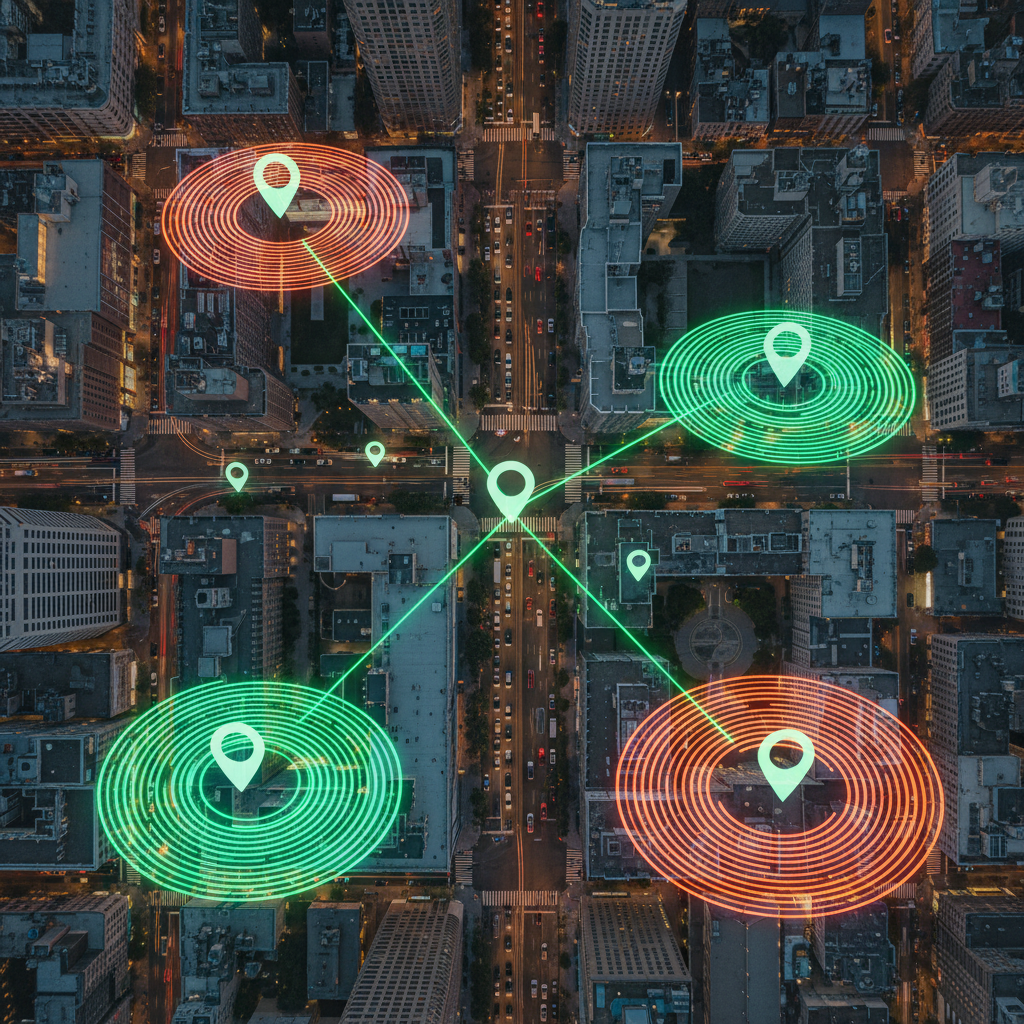
The biggest myth in local SEO is that the business closest to the searcher always wins. While Distance is a factor, it is only one-third of the puzzle. If distance were the only metric, you would only ever see businesses within a two-block radius. Instead, you often see a shop three miles away outranking one that is three doors down. This happens because Google balances distance against Relevance (how well the profile matches the intent) and Prominence (how authoritative the business is online and offline).
To improve your google business profile seo, you must understand that Google’s algorithm is essentially a “trust engine.” If the shop across the street has more consistent data across the web, better review sentiment, and a more focused category selection, Google will trust them more than you, even if you are physically closer to the user. This is why many owners find themselves asking why your business stays invisible to customers standing right outside. To bridge this gap, we have to look at the technical signals your competitor is sending that you might be missing.
Prominence is where most businesses fail. It’s not just about having a website; it’s about how much the internet “talks” about you. If your competitor is mentioned in local news, sponsored a little league team with a link from the league’s site, or has a higher volume of localized backlinks, their prominence score will dwarf yours. We call this building “Local Authority,” and it is the secret sauce to ranking for high-intent keywords across a wider geographic area.
Category Sabotage: Are They Playing a Different Game?
One of the most common reasons a competitor outranks you is a simple “Category Mismatch.” Google allows you to choose one primary category and up to nine secondary categories. The primary category carries the most weight – by far. If you are a “Lawyer” and your competitor is a “Personal Injury Attorney,” they will beat you every single time someone searches for “car accident lawyer near me,” even if you have more reviews.
Recent Reddit research and community case studies among SEO professionals have confirmed that categories are a key differentiator often overlooked by businesses. Many owners set their category when they first created their profile five years ago and never looked back. Meanwhile, the shop across the street is likely using tools to see which categories are currently trending for their specific services. If you haven’t audited your categories lately, you are likely suffering from why picking the wrong primary category kills local SEO growth.
Check your competitor’s source code or use a browser extension to see their primary category. If they are using something more specific than you, change yours immediately. However, be careful: changing your primary category too often can trigger a manual review or suspension. You need to align your category with the specific “money keywords” that drive your revenue, not just general terms. For example, a “Plumber” might see a massive boost by switching to “Drainage Service” if that is where the local search volume is currently concentrated.
Review Velocity vs. Review Quality
We all know reviews matter, but most people look at the wrong metrics. It’s not just about having a 4.8-star rating. Google’s algorithm is obsessed with Review Velocity – the rate at which you acquire new reviews – and the keywords contained within those reviews. If the shop across the street is getting five reviews a week while you get two a month, Google perceives them as more “active” and relevant to the current market.
Furthermore, look at the content of those reviews. Are customers using keywords like “best emergency plumber” or “affordable HVAC repair”? Google reads these reviews to understand what your business actually does. If your competitor has 50 reviews mentioning “roof leak repair” and you have 100 reviews that just say “great service,” Google will rank them higher for roof-related searches. You should be using local seo tools to track these keyword trends in your competitor’s feedback loop.
A word of caution: do not try to “fake” velocity. Google is incredibly good at spotting “Review Spikes” – a sudden influx of 50 reviews in two days for a business that usually gets one. This is a massive red flag that often leads to why your review velocity spike just triggered a GMB ghost ban. Instead, focus on a consistent, automated request system that ensures a steady drip of honest, keyword-rich feedback from your actual customers.
The Visual Gap: Why Their Photos Get the Clicks
If you look at your competitor’s profile and see professional, high-end studio photography, you might think you need to hire a photographer to compete. You’d be wrong. In fact, our research shows a surprising trend: Raw office photos and grainy smartphone shots often get more clicks than professional stock images. Why? Because they build immediate trust. In an era of AI-generated content and fake personas, users want to see the “real” you.
When a customer sees a photo of your actual truck, your actual team in the field, or the actual waiting room they will be sitting in, their “trust meter” spikes. This is what we call “Proof of Service” photos. For 2026 SEO growth, Google is increasingly using image recognition AI to verify that you are who you say you are. If your competitor is uploading weekly photos of their team working on-site, they are providing “Entity Validation” that your static, three-year-old professional photos simply can’t match.
To take your spot back, start a habit of taking three photos a week. Don’t worry about the lighting or the perfect angle. Capture the work in progress. Show the “behind the scenes.” This strategy is detailed in our guide on 4 grainy smartphone photos that rank better than professional studio shots. These photos increase your click-through rate (CTR), and a high CTR is one of the strongest indirect ranking signals in the Google Maps algorithm.
2026 Ranking Signals: The New Frontier of Local Search
As we move into 2026, the old rules of “keywords and citations” are being supplemented by much more sophisticated data points. If the shop across the street is outranking you, it might be because they’ve adapted to these “New Frontier” signals. Google is no longer just looking at your profile; it’s looking at how the world interacts with your physical location.
- Walking Paths & Transit Signals: Google uses mobile movement data to see if people actually visit your shop. If the “shop across the street” has a higher volume of people walking into their door (tracked via GPS on their phones), Google views them as a more popular and relevant destination. This is why how customer walking paths drive your 2026 GMB ranking is becoming a critical topic for urban businesses.
- Live Inventory Sync: Retailers who sync their actual shelf stock with Google are seeing a massive ranking boost. If a user searches for a specific product and your competitor has “In Stock” listed on their profile via a live feed, Google will prioritize them over you every time. Learn more about why live inventory sync rules GMB ranking in 2026.
- AI Search Filters: Google’s “Search Generative Experience” (SGE) now summarizes reviews and web content to answer specific queries. If your competitor’s website and reviews clearly state they “specialize in eco-friendly paints,” they will appear in the AI-driven “best eco-friendly painter” filter, even if they aren’t the #1 overall result.
Another critical 2026 factor is Response Time. If a customer messages you through the Google Business Profile and you don’t respond within 5 minutes, you are losing rank. Google wants to provide the best user experience, and that means connecting users with businesses that are actually awake and responsive. If your competitor is faster on the trigger, they are winning the “convenience” signal.
Technical Audit: Citations and Backlinks
While the “human” signals are growing, the technical foundation remains vital. This is where Prominence is built. If your business has an “Entity Mismatch” – meaning your name, address, or phone number (NAP) is slightly different on Yelp, Facebook, and your own website – Google’s confidence in your business drops. A single digit error in your phone number across the web can be the reason for why a single digit error in your phone number kills search traffic.
Your competitor might be using a google maps ranking service to clean up their citations and build local backlinks. Local backlinks aren’t just any links; they are links from other local businesses, neighborhood blogs, or city directories. One link from the local Chamber of Commerce is worth more for your Map Pack ranking than ten links from high-authority national blogs. Google looks for these local connections to verify that you are a “pillar” of the community.
Audit your competitor’s backlink profile. Are they listed on the “Best of [City]” lists? Do they have links from local news outlets? If they do, you need to match and exceed that local coverage. This is the “grind” of SEO, but it creates a moat around your ranking that is very hard for competitors to cross once established.
Tools of the Trade: How to Automate Your Competitor Research
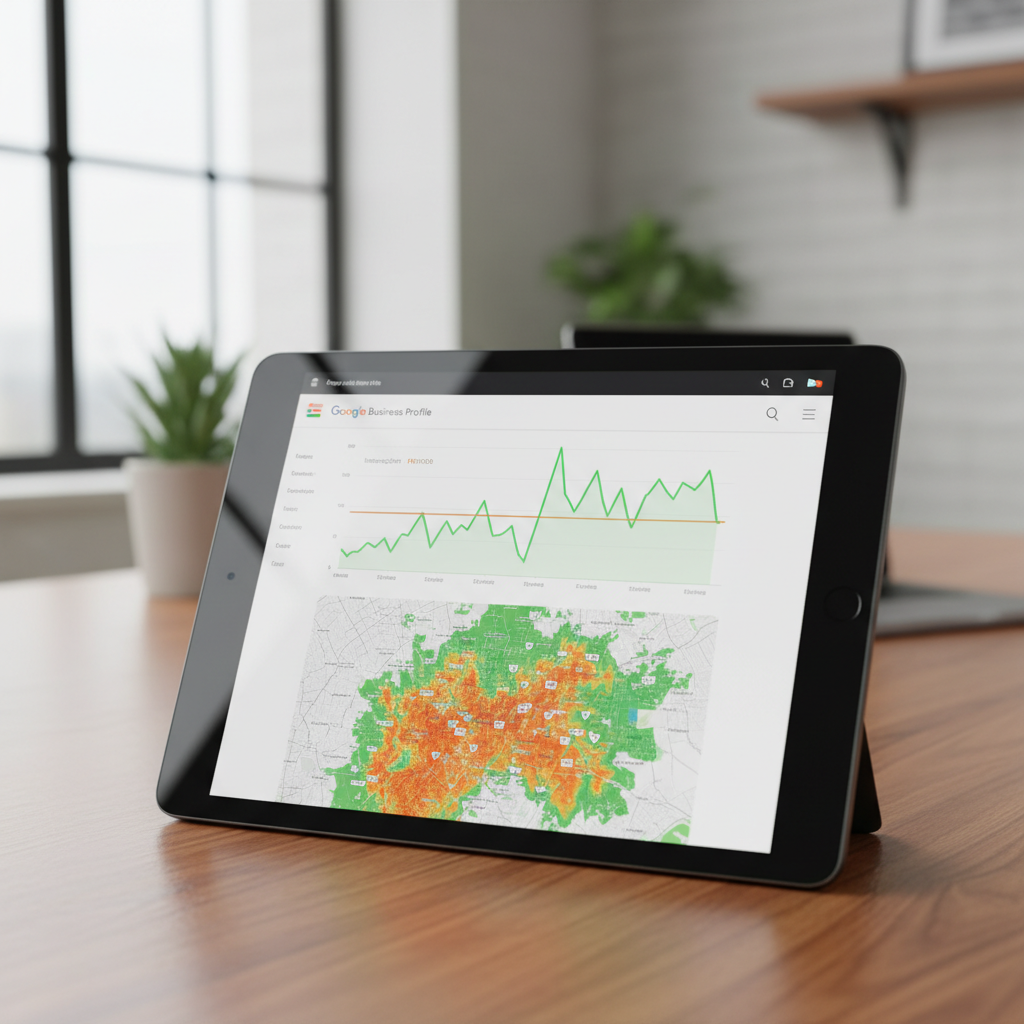
You cannot win this battle by manually searching Google every day. Your results are biased by your own search history and location. To see what is actually happening, you need to use specialized software that provides a “Geo-Grid” view. These tools show you exactly where your ranking drops off – perhaps you are #1 in your parking lot but drop to #10 just two blocks away. This data allows you to see the “reach” of the shop across the street.
I highly recommend utilizing SEO Viper Tools or similar high-level local seo ranking tools to automate this surveillance. These tools can alert you the moment a competitor changes their primary category, gets a surge of reviews, or updates their services. By monitoring these shifts in real-time, you can react before they solidify their lead. Remember, the goal of a gmb ranking service is to provide you with actionable data, not just pretty charts.
Conclusion & Your 24-Hour Action Plan
Beating the shop across the street isn’t about one single “hack.” It’s about out-executing them on the fundamentals of rank google business profile strategies. They aren’t better than you; they are just sending clearer signals to the Google algorithm. If you follow the audit steps above, you will identify the gaps in your relevance, distance, and prominence that are currently holding you back.
Your 24-Hour Action Plan:
- Audit Categories: Check if your competitor’s primary category is more specific than yours. If so, update it.
- Review Response: Respond to your last three reviews using localized keywords and a helpful tone.
- Visual Update: Take three “Proof of Service” photos on your phone right now and upload them to your profile.
- NAP Check: Ensure your business name, address, and phone number are identical on your website and your Google profile.
By taking these immediate steps, you are starting the process of reclaiming your territory. For more advanced techniques, check out our guide on SEO growth tactics for Google Business that drive results by midday. The Map Pack is waiting for you – go take your spot back.