Stop Obsessing Over Citations and Start Fixing Your Service Pages

Stop Obsessing Over Citations and Start Fixing Your Service Pages

Stop Obsessing Over Citations and Start Fixing Your Service Pages

If you are still spending your marketing budget on massive citation building packages in 2026, you are essentially throwing money into a digital black hole. I see it every single day: small business owners and misguided agencies chasing the ghost of 2015 SEO tactics. They buy a “100-pack” of directory listings from some low-cost provider and then sit back, wondering why their map pin is stuck on page four. As a google business profile seo expert, I’m here to tell you that the “Citation Myth” is dead. The top-ranking businesses aren’t winning because they are listed on some obscure “Local Business Finder” directory in another country. They are winning because they have built a foundation of relevance through their website’s service pages.

The game has shifted. Google’s algorithms, now heavily influenced by AI and the Knowledge Graph, don’t need a thousand directory listings to know you exist. They need validation. They need to see that your website actually supports the claims you make on your Google Business Profile (GBP). If you want to dominate the local map pack, you need to stop focusing on quantity and start focusing on high-intent, technically sound service pages that prove your expertise to the algorithm. It is time to stop playing the volume game and start playing the relevance game.

The Death of the “NAP Consistency” Obsession

For a decade, the “Golden Rule” of local SEO was NAP consistency – Name, Address, and Phone number. We were told that if your suite number was listed as “Ste 200” on Yelp and “Suite 200” on YellowPages, your rankings would suffer. In 2026, this level of obsession is not just outdated; it’s a waste of time. Google is incredibly sophisticated. Its AI models are more than capable of understanding that “St.” means “Street” and that a business moving across the street is still the same entity. Citations have moved from being a primary ranking “booster” to being a “baseline” requirement. They are the digital equivalent of having a business card – you need one, but having a thousand of them doesn’t make you a better CEO.

When you focus your entire strategy on these low-tier directories, you are ignoring the signals that actually move the needle. Google uses these mentions to build a knowledge graph of your business, but it prioritizes high-authority sources and, more importantly, your own digital properties. If you’re still caught in the trap of buying bulk listings, you should read my breakdown on why you should Stop Buying Cheap Business Directory Listings and Do This Instead. The reality is that Google’s trust is earned through depth of content and user engagement, not through a robotic spread of your phone number across the web.

Today, citations are “mentions.” They are signals that help AI search models identify your business as a real-world entity. However, once Google has verified your existence, the ranking benefit of adding the 101st citation is zero. Your time and money are much better spent ensuring your website is communicating the specific services you offer in a way that Google can’t ignore. The obsession with NAP has blinded many to the fact that their website is their most powerful local SEO tool.

Why Google Uses Your Service Pages to Rank Your Map Pin

There is a concept I call the “Validation Loop.” Think of your Google Business Profile as your “claim” and your website as your “proof.” If your GBP says you are a “Plumber” and you select “Water Heater Repair” as a secondary category, Google looks at your website to see if you actually know what you’re talking about. If your website is just a single homepage with a bulleted list of services, you have failed the validation test. Without a dedicated “Water Heater Repair” service page, Google has no reason to rank you for that high-intent, high-value keyword in the local pack.

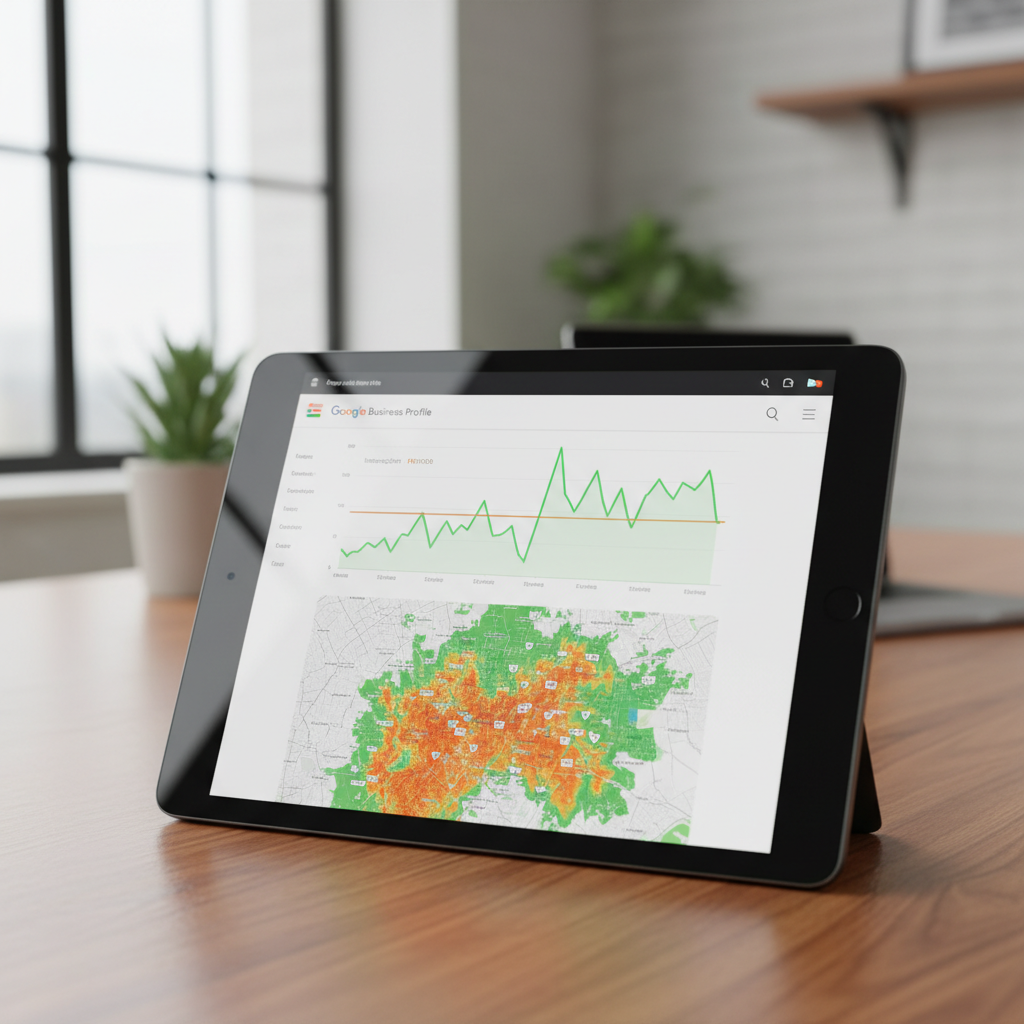
The data backs this up. According to the latest Whitespark Local Search Ranking Factors, GBP signals now account for over 32% of how well a business ranks in the local pack. This is more than any other single factor. But here is the catch: those GBP signals are heavily influenced by the content on the linked website. When a user searches for “emergency furnace repair near me,” Google scans the map pins and then immediately looks for the most relevant landing page to justify ranking that pin. If your competitor has a 1,000-word page dedicated to furnace repair with local testimonials and technical FAQs, and you don’t, they win – even if you have more reviews. Using a professional google maps ranking service can help you identify these content gaps that are currently holding your rankings hostage.

This is why you see “website mentions” appearing in the local pack snippets. Google is literally telling you: “We are ranking this business because their website mentions [Keyword].” If you aren’t feeding the algorithm the specific data it needs through your service pages, you are leaving your rankings to chance. You can’t just tell Google what you do; you have to show them. This “content-first” strategy is why some businesses see a 300% growth in traffic compared to those stuck in the “directory-first” mindset. Relevance is the new currency of local SEO.

Anatomy of a Service Page That Actually Ranks in 2026

If you want to rank google business profile listings effectively, your service pages need to be more than just a wall of text. They need to be technical assets. In 2026, a high-ranking service page follows a specific anatomy designed to satisfy both the human user and the Googlebot. Most businesses fail here because they create generic pages that look like they were written by a template. If your page could apply to a plumber in New York just as easily as it applies to your business in London, you’ve already lost.

  • Hyper-local Content: Stop targeting “Plumbing Services.” Target “Emergency Plumbing Services in [Your Neighborhood/City].” Mention local landmarks, specific neighborhoods you serve, and even local climate issues that affect your service (e.g., “how [City]’s hard water affects your pipes”). This creates a geographic relevance that a generic directory listing can never match.
  • Proof of Service: This is the new gold standard. Stock photos are a ranking killer. Google’s Vision AI can tell the difference between a stock photo and a real photo of your team working at a job site in your city. Include real photos of completed projects, your branded trucks, and your technicians. These “Proof of Service” signals are massive for building trust and local relevance.
  • Technical Schema Markup: You must use LocalBusiness and Service Schema. This is the language Google speaks. It allows you to explicitly tell the search engine: “This is the service we provide, this is the price range, and this is the specific area we cover.” Without this, you are hoping Google “guesses” correctly.
  • Internal Link Structure: Your service pages should link back to your GBP and other related services. This creates a web of relevance that confirms your authority.

Many business owners find that despite having these pages, they still don’t show up. There is often a technical bottleneck. I’ve written extensively about The Hidden Reason Your Service Area Page Never Ranks for Local Searches, and it usually comes down to a lack of unique, localized value. If you are just copy-pasting the same page for ten different cities, Google will filter you out as “duplicate content” or “doorway pages.” Each page must be a standalone resource for that specific service and location.

The Role of User Experience (UX) in Local Rankings

In 2026, Google isn’t just looking at the content; it’s looking at how users interact with it. If a user clicks your map pin, goes to your service page, and immediately hits the “back” button because the page looks like it was built in 1998, your rankings will tank. Google interprets this as a lack of relevance. Your service pages must be mobile-first, fast-loading, and have a clear Call to Action (CTA). Whether it’s a “Book Now” button or a “Call for a Quote” link, the path to conversion must be seamless. This engagement signal is a massive part of google business profile optimization.

The 2026 Pivot: From Keywords to Human Intent

The era of “keyword stuffing” is long gone. With the rise of Search Generative Experience (SGE) and Gemini, Google is moving toward understanding “entities” and “intent.” When someone searches, they aren’t just looking for a string of words; they are looking for a solution to a problem. Your service pages need to be the answer to those problems. Instead of just listing “Roofing,” your page should answer “How much does a new roof cost in [City]?” or “What are the best roofing materials for [City]’s weather?”

AI search models look for “mentions” and “entities” across the web to verify your authority. If your service pages are structured to answer the questions customers actually ask, you become the “authority entity” for that topic in your local area. This is where local seo tools come into play. You need to track not just where you rank for a keyword, but how often you appear in AI-generated answers and how your intent-based content is performing. The shift from keywords to intent means your content must be more human, more conversational, and more helpful than ever before.

Think about the “Buyer’s Journey.” A customer might first search for “why is my AC making a clicking noise?” (Informational Intent). Then they search for “AC repair costs” (Commercial Intent). Finally, they search for “best AC repair near me” (Transactional Intent). If your website has content that covers all three stages, Google views you as a comprehensive expert. This authority flows directly into your Google Business Profile, helping you rank higher on google maps because you aren’t just a business – you are a resource.

Stop Buying “Cheap SEO” and Start Investing in Infrastructure

It’s time for some tough love. If you are paying $99 a month for a “local SEO package” that promises 50 citations and “GMB optimization,” you are being scammed. These packages are automated, low-quality, and often do more harm than good. They focus on metrics that don’t matter while ignoring the technical infrastructure of your website. Building a high-authority local presence takes time, expertise, and a real investment in content and technical SEO.

Cheap SEO packages rely on outdated tactics because they are easy to automate. But Google’s spam filters are better than ever. Those 50 low-quality directory links will likely be ignored by Google, or worse, flagged as spam. If you want to know why your rankings are stagnant despite “doing SEO,” you need to read about The Brutal Reason Those Cheap SEO Packages Never Show Up on Google Maps. Real growth comes from building a website that Google *wants* to show to its users. It comes from high-quality service pages, real customer reviews, and a technically sound GBP.

Investing in your website’s infrastructure is an investment in a long-term asset. A citation on a “Business Link Directory” can disappear tomorrow. A high-quality service page that ranks for a high-intent keyword will continue to generate leads for years. Stop looking for shortcuts and start building a digital presence that actually deserves to be at the top of the search results. Use gmb ranking service strategies that focus on long-term authority rather than short-term “hacks.”

Conclusion: Your 3-Step Action Plan

Winning in the local pack in 2026 isn’t a mystery; it’s a matter of shifting your focus from the “Citation Myth” to the “Relevance Reality.” If you want to outrank your competitors and stay at the top, follow this 3-step action plan:

  1. Audit your GBP categories: Ensure your primary category is 100% accurate. If you need help with this, check out Why Picking the Wrong Primary Category Kills Local SEO Growth.
  2. Build dedicated service pages: Create a unique, high-quality, hyper-local page for every single service you offer. Include real photos, local testimonials, and technical schema.
  3. Focus on Authority: Use rank google business profile strategies that link your GBP to your service pages, creating a “Validation Loop” that Google cannot ignore.

Stop obsessing over citations. Start fixing your service pages. That is how you win the 2026 Local Map Pack.