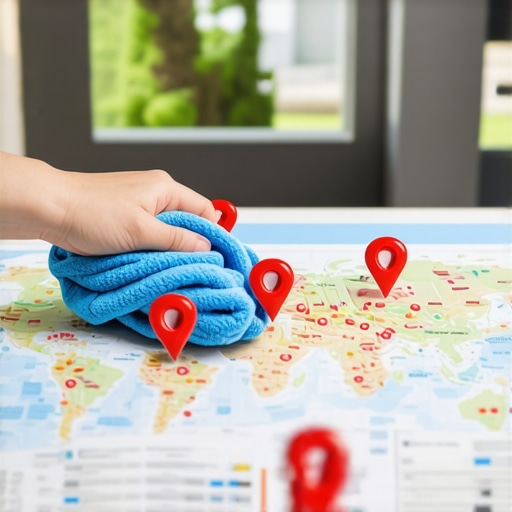
Wiping the Slate Clean: Fixing Past Local SEO Disasters
The sidewalk smells like wet concrete and diesel exhaust today. It is the kind of damp morning where the glitches in the digital world become visible to those of us who know where to look. I see the storefronts not as brick and mortar, but as coordinates struggling to maintain their integrity. Many business owners are walking through a haze of past mistakes. They hired an agency that promised the world but delivered a mess of keyword stuffing and map spam. Now, they are paying the price. The pin moved. The rankings dropped. The phone stopped ringing. Recovering from a local SEO disaster requires more than just a fresh start; it requires a forensic reconstruction of your digital identity. We have to scrape away the layers of bad data, just like cleaning a lens before taking a high contrast street photo.
The centroid collapse that killed a roofing giant
A centroid collapse occurs when Google loses trust in a physical location due to conflicting data signals across primary and secondary verification tiers. This usually results from mismatched phone numbers in Local Services Ads or inconsistent NAP data, causing a business to vanish from the Map Pack despite having high organic authority.
Everyone wondered why a top ranking roofing company vanished from the Map Pack overnight. They had hundreds of reviews and years of history. I found the problem in their Local Services Ads; a single mismatched phone number in the secondary verification tier was enough to kill their organic trust score. This is the reality of the modern algorithm. It is a spatial database that demands absolute precision. When the data diverges, the system protects itself by hiding the business. This client had tried to use tracking numbers without proper porting or integration. They thought they were being smart with their data. Instead, they triggered a logic loop that flagged them as a potential fraud. We had to implement the first response protocol for a disappearing map visibility to stop the bleeding. It took weeks of manual data cleaning to prove to the algorithm that the business was still at the same GPS pin. We had to audit every single citation, starting with the most obscure directories that the previous agency had touched. This is why you need a audit checklist for local business penalty recovery before you try to change anything else.
“Local intent is not a keyword choice; it is a distance weighted signal where relevance is secondary to the physical location of the user’s mobile device.” – Map Search Fundamental
Reversing the damage of keyword stuffed business names
Fixing a keyword stuffed business name requires an immediate edit to the legal name followed by a massive citation synchronization campaign. This process normalizes the ranking signals by aligning the Google Business Profile with actual legal documents, utility bills, and signage to prevent a hard suspension during the edit.
I have seen hundreds of businesses try to game the system by adding cities and services to their name. It works for a month. Then the hammer drops. The algorithm sees through the facade. If your legal name is Joe’s Plumbing but your profile says Best Emergency Plumber in Chicago Joe’s Plumbing, you are a target. You need stabilizing your local rankings after changing your business name to ensure the transition does not kill your traffic. Many owners are afraid to change it back. They think they will lose their rankings. The truth is that you are already on borrowed time. The Street Photographer in me sees the fake signage a mile away. So does Google. We use how to monitor keyword stuffed names to see how the competition is doing it, but we never follow their lead. We fix the name, then we hit the directories. You must ensure your listing tools are actually pushing the right data. Most automated systems fail here. They create more duplicates. They make the glitch worse. We do it manually. We document every change. We take photos of the real sign. We upload those photos with GPS metadata. This proves the physical reality matches the digital record. It is a slow process. It is the only way to build lasting trust. If you are struggling, you might need local seo services to normalize rankings after a bad edit. It is about transparency. It is about being real in a world of fakes.
Fixing technical indexing and crawling issues
Technical SEO for local search focuses on resolving redirect loops, eliminating soft 404 errors on service area pages, and ensuring that the local entity schema is properly nested within the site header. These fixes allow Google’s crawlers to verify the physical proximity of the business without confusion.
If the crawlers cannot find your location pages, you do not exist in the Map Pack. I often find that past developers left a trail of broken links. These are like potholes in the digital street. You need fixing the redirect loops that confuse local search crawlers to ensure the path to your data is clear. Sometimes the issue is deeper. A hacked site can leave malicious code that redirects local traffic. I have seen rankings vanish because a bot injected foreign language text into the meta descriptions. You must be aggressive about cleaning up malicious code to restore your search visibility. This is why we use technical seo services to fix indexing issues. We look for finding the source of soft 404s on your service area pages. These soft errors tell Google a page exists when it actually does not. It creates a trust gap. We fill that gap with solid code. We use clean JSON-LD. We make sure the address on the website is identical to the address on the map pin. Not similar. Identical. Even a missing suite number can cause a ranking drop. The math of proximity does not allow for errors. We also check for why broken links are hidden leeches on your local seo budget. Every broken link is a signal of neglect. Google hates neglect. It wants businesses that are active and accurate. We fix the foundation before we build the house. That is the rule of the street.
Local Authority Reading List
- How to Audit Your Local Map Presence in Under 15 Minutes
- The Secret to Getting Competitor Spam Removed from Local Maps
- Why Your Google Listing Shows Two Languages and How to Fix It
- The Essential Checklist for Every New Business Profile Setup
- The Fast Way to Clear a Search Console Security Warning
The penalty for over aggressive location page strategies
Over aggressive location page strategies often lead to doorway page penalties where multiple pages with near identical content target different suburbs. To fix this, you must consolidate thin content into authoritative regional hubs and use natural language to describe the unique service attributes of each area.
I see it in every major city. A service business creates 50 pages for 50 different tiny neighborhoods. The content is exactly the same except for the name of the town. This is a trap. Google calls these doorway pages. They are a violation of quality guidelines. If you have been flagged, you need how to fix the penalty from over aggressive location pages. We stop the duplication. We move toward the content fix for location pages that feel too repetitive. We add real value. We talk about the specific landmarks near the service area. We mention local traffic patterns. We include photos of the team working in that specific neighborhood. This is how you win in the AI Overview era. You provide information gain. You provide data that a bot cannot hallucinate. We also look at the smart way to expand location pages without being spammy. It involves building a cluster of content around each location. One page is not enough. You need a guide to the area. You need to show that you are actually part of the community. If you have too many pages, we prune them. We use 301 redirects to push the authority to a main hub. This preserves the link juice while satisfying the quality algorithms. We often use seo services to fix location page penalties to clean up the footprint of past black hat mistakes. It is about quality over quantity every single time.
“Relevance is determined by the thematic alignment between the user’s query and the verified attributes of the business entity as recorded in the knowledge graph.” – Local Search Patterns
Reclaiming visibility after hiding a business address
Hiding a business address can cause an immediate loss of rankings because Google’s proximity algorithm loses the exact point of origin for the service. To recover, you must redefine your service area polygons precisely and ensure your verification documents clearly prove you operate within those boundaries.
Many home based businesses get scared and hide their address. They think it protects their privacy. It does. But it also kills their visibility. Google prioritizes storefronts with visible addresses because they are easier to verify. When you hide yours, you become a Service Area Business (SAB). The rules change. You are no longer a pin; you are a polygon. If your rankings crashed, you need the immediate fix for a disappearing google maps ranking. We check if you are mapping out your service area without triggering the spam filter. If you select a radius that is too large, Google will think you are spamming. We keep it tight. We focus on the areas where you actually have customers. We use seo services to recover impressions after hiding address. We look for language inconsistencies that might have appeared when you changed the profile type. Sometimes Google gets confused and starts showing your listing in the wrong language. We fix that. We also make sure you have the right essential checklist for every new business profile setup. Transitioning from a storefront to an SAB is a major change. It requires a complete audit of your proximity signals. We often find that hidden addresses lead to preventing the ghost suspension on new business profiles. You have to be careful. You have to be precise. You have to prove you are who you say you are, even if you don’t want people showing up at your front door.
Professional toolkits for local search recovery
The best local SEO tools for Google Business Profile management provide real time grid tracking and citation monitoring to identify data discrepancies before they trigger a suspension. These toolkits allow for the forensic analysis of competitor spam and the normalization of your own ranking signals.
You cannot fight a war without the right gear. I have a bag full of lenses. You need a bag full of data. We look for the best local seo tools for google business profile to give us an edge. We use the exact tools we use to rank high value local keywords. These are not the basic dashboards that your average agency uses. These are precision instruments. They show us the grid. They show us exactly where your ranking drops off. If you are a service business, you need a gmb optimization toolkit for service businesses. This includes tools for review management and photo optimization. We also look for tools to fix low gmb rankings. These tools help us identify fake map competitors who are pushing you out of the pack. We use top google business profile seo toolkits to automate the boring stuff so we can focus on the strategy. But be careful. We know the risks of using automated toolkits for gmb management. If you let a bot manage your profile, you will eventually get flagged. You need a human touch. You need someone who can see the glitch in the data. We also help you buy local seo tools for gmb that actually move the needle. Don’t waste money on software that just gives you pretty charts. You need actionable data. You need to know why the shop across the street is winning. We find the answer. We fix the problem.
Managing multi location profile stability
Managing multi location businesses requires a centralized data management system to prevent internal competition and coordinate consistent NAP data across all branches. This ensures that the proximity algorithm treats each location as a distinct entity rather than a duplicate of the main office.
When you have ten locations, the problems are ten times worse. I often see why your franchise locations are competing against one another. Google gets confused. It doesn’t know which one to show. You need a local seo toolkit for multi location businesses. This allows you to manage everything from one place while maintaining the unique identity of each shop. We look at the scalable way to manage hundreds of google business profiles. It starts with a clean audit. We use how to audit your business profile for language inconsistencies. If one location is in English and another has Spanish tags, it creates a mess. We also watch for why your local ranking volatility spikes after business expansion. Every time you add a location, you shake the tree. You have to stabilize the original rankings first. We use 4 professional tools for scaling your local map pack dominance. These tools help us track the performance of every single pin. We look for the weak links. We fix them before they bring down the whole network. It is about maintenance. It is about keeping the data clean across the entire city. If you don’t, the algorithm will pick a winner for you. Usually, it’s not the one you want. We take control. We define the hierarchy. We ensure every location has its own space to breathe and rank.
Final audit protocols for a clean ranking future
A final audit protocol must include a full citation sweep, a review of image metadata, and a check of the site’s mobile responsiveness to ensure the local entity is fully optimized for AI discovery. This ensures that the recovery is permanent and the business is protected against future algorithm shifts.
The sun is coming out now. The wet concrete is drying. The glitches are harder to see, but they are still there. You need a routine audit for staying at the top of the map pack. Don’t wait for a disaster. Check your data every month. We use the audit move that finds your biggest local traffic leaks. We look at the small things. Are your hours correct on every site? Is your phone number clickable on mobile? We use a step by step guide to downloading and organizing ranking data. This allows us to see the trends before they become problems. If you have a history of issues, you need cleaning up the footprints of past black hat seo mistakes. It is like erasing a bad memory. It takes time. But once the slate is clean, the growth is explosive. We use the defensive strategy to prevent future business profile suspensions. We don’t want to do this twice. We build a wall of trust around your business. We use how to use natural language to beat robotic map strategies. We speak to humans. Google listens to humans now. The bots are just the messengers. Keep your data clean. Keep your photos real. Keep your name honest. That is the only way to survive the street. The camera never lies. Neither does the map pack if you look close enough.