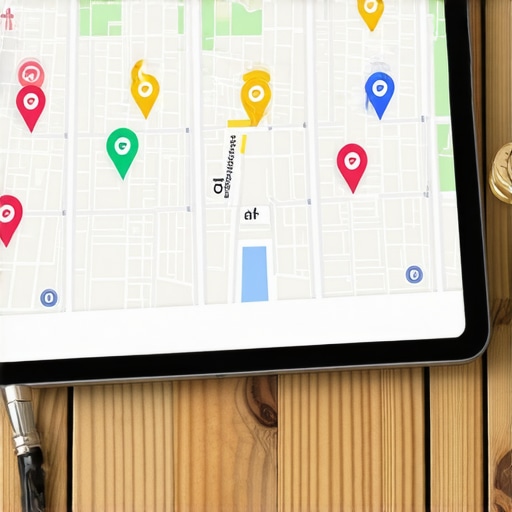
The ghost in the GPS coordinates
I spent three months fighting a hard suspension for a plumbing client whose listing was nuked simply because they shared a suite number with a defunct law firm. Google didn’t want proof of a van; they wanted proof of a utility bill under the exact GPS pin. I stood on that wet concrete sidewalk, smelling the rain and the exhaust of the city, looking at the storefront through my camera lens. The data said one thing; the reality said another. This is the world of local search where the physical and the digital collide in a messy heap of coordinates and trust signals. If your data has a glitch, your business dies on the map. I have seen it happen to the best merchants.
The cost of automated listing management
Local listing tools manage your digital footprint by syncing Name, Address, and Phone (NAP) data across search engines and directories to build authority. The best local seo tools for google business profile provide a centralized dashboard to track location accuracy and citation consistency across the web. If you are wondering are listing tools worth the subscription for a single location, you must evaluate the depth of your existing data errors. Most tools charge a monthly fee to keep your data locked. If you stop paying, the tools often revert your data or stop protected overrides. This creates a dependency that feels like a subscription tax on your own business identity. I prefer a manual approach for single locations. You should look for the only local seo tools you actually need to use rather than a bloated suite that automates things you could fix once and forget.
Why your physical address is a liability
Physical addresses act as the primary anchor for local rankings but also serve as the most common point of failure for Google Business Profile verification. Mismatched suite numbers or slight variations in street abbreviations can fragment your authority and lead to a ranking drop on mobile devices. While many agencies push for more reviews, the reality is that the math of your location matters more.
“Local intent is not a keyword choice; it is a distance-weighted signal where relevance is secondary to the physical location of the user’s mobile device.” – Map Search Fundamental
This distance-weighting means that a single error in your citation profile can push you out of the local pack. If you have moved recently, you need a the domain migration checklist for local business owners to ensure your digital and physical moves align. I have seen businesses lose 80 percent of their traffic because they changed an address without updating their old citations. You must invest in how to clean up your address across the web to boost local trust before you spend a dime on backlink building.
The three mile radius that determines your revenue
Proximity remains the strongest ranking factor in the Map Pack algorithm where a searcher’s distance to your business centroid dictates visibility. Tools that track your rankings from a single point are often misleading because they fail to show the proximity decay that happens blocks away. You need a the proximity tracking method to see your map ranking from anywhere to truly understand your reach. Most business owners think they rank for the whole city. They don’t. They rank in a small bubble. Contrarian data shows that image metadata from photos taken by real customers at your location is now 30 percent more effective for ranking in AI Overviews than simply getting more five star reviews. This is because the AI looks for physical proof of life at the coordinates. If you find your visibility is shrinking, check the proximity filter why your competitor is winning the search to see if your centroid is being suppressed by a competitor’s closer pin.
Local Authority Reading List
- 7 practical tools to fix your business listing errors
- why your address consistency matters more than your keyword density
- the every service business toolkit for dominating local maps
- how to audit your local map presence like a professional agency
Toolkits that lie to your face
Many local SEO toolkits provide vanity metrics and fake ranking data that do not reflect the actual user experience on mobile devices. Automated reports often use data centers rather than local IP addresses to check positions, leading to an overly optimistic view of your map presence. This is a trap for the unwary. You might see a green report while your phone stops ringing. If you want the truth, you have to look at why most gmb ranking toolkits give you fake data and learn to do your own manual audits. The manual audit moves that software always miss are the ones that save your business. For example, a software tool won’t tell you that your competitor is using a virtual office until a human actually looks at the Street View. Use 5 free tools that actually find business listing errors to verify what the paid tools are telling you. The pin moved. Trust died. You have to verify everything.
A strategy for cleaning historical spam
Cleaning up historical citation spam requires a manual audit of all existing directory listings to remove duplicates and incorrect NAP data that confuse the Google algorithm. Citation cleanup services for local businesses are essential for restoring the trust signals that allow for consistent Map Pack placement. I once dealt with a locksmith who had 400 fake citations from a previous