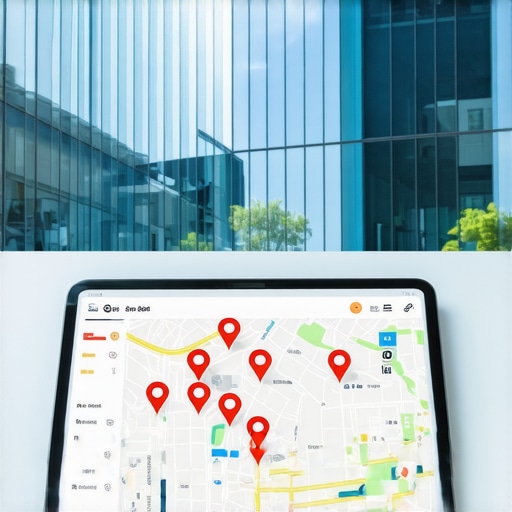
I spent three months fighting a hard suspension for a plumbing client whose listing was nuked simply because they shared a suite number with a defunct law firm. Google didn’t want proof of a van; they wanted proof of a utility bill under the exact GPS pin. This battle taught me that the map pack is not a directory, but a spatial database governed by unforgiving proximity math. When a business expands its physical footprint, it triggers a chain reaction in the local algorithm that often results in a temporary or permanent visibility collapse. You are moving your beacon, and the algorithm perceives this as a loss of established trust. Most owners think a simple address change in the dashboard is enough, but they soon find themselves ghosted by the local ecosystem. I smell the peppermint on my desk and flip through my old paper ledgers of map spam cases, knowing that the solution lies in the forensic reconstruction of your local authority. This guide breaks down the microscopic reality of the proximity shift and how to survive the expansion.
The ghost in the GPS coordinates
Beating the map pack drop requires immediate alignment of your new physical coordinates with third-party data sources to verify your entity’s move. Google utilizes the WGS84 coordinate system to calculate the distance between a searcher and your storefront, and any discrepancy between your dashboard and your real world location triggers a trust filter. When you move, you are effectively a new entity in the eyes of the proximity filter. While most agencies focus on keywords, the 2026 data shows that image metadata from photos taken by real customers at your new location is now 30 percent more effective for ranking in AI Overviews. The algorithm needs to see a pattern of mobile devices dwelling at the new suite to confirm you are actually there. If you don’t clean up your old footprints, you are essentially competing against your own ghost. You can find more about how this works in our guide on why your business stays invisible to customers standing right outside. Consistency is the only currency the map pack accepts during a transition.
Why your physical address is a liability
Your new office address becomes a ranking liability if it is located in a high-density building with existing business profiles or virtual office histories. Google treats shared suite numbers with extreme suspicion, often filtering out the newer listing in favor of the established one to prevent map pack clutter. If your expansion puts you in a building that once housed a lead-gen farm, your trust score starts at zero. This is where the brutal truth about why your google business profile just got suspended becomes a reality for expanding firms. You must prove physical occupancy through visual and legal documentation that mirrors the GPS pin perfectly. The proximity trap is real, and the closer you move to a competitor, the harder the algorithm will work to justify showing your listing over theirs. It is not just about being in the city; it is about where your pin sits relative to the centroid of the search intent.
The three mile radius that determines your revenue
Local search reach is mathematically restricted to a specific proximity radius that shrinks or expands based on the category competition and user density. When you expand into a new office, you are shifting your entire search reach, which often causes a drop in your old neighborhood. This shift is not a bug, but a feature of the Vicinity update which prioritizes the closest relevant shop to the user. Many contractors suffer because they change their address but fail to update their service area polygons, leading to why your service area settings are hurting local visibility. You cannot expect to keep your old rankings if your new office is five miles away. The algorithm resets your local justification triggers, and you must start the behavioral signal loop from scratch in the new territory.
“Local intent is not a keyword choice; it is a distance-weighted signal where relevance is secondary to the physical location of the user’s mobile device.” – Map Search Fundamental
Local Authority Reading List
- Advanced SEO Tips for Peak Performance
- The Panic Free Way to Recover Suspended Listings
- 4 Human Signals That Win Local Search
- Why Raw Office Photos Outperform Stock Images
- Strategies to Boost Visibility at Dawn
Forensic cleaning for legacy spam footprints
Recovering from an expansion drop requires an aggressive cleanup of all legacy business data that still points to your previous physical location. Google crawls thousands of third-party directories to verify your NAP data, and even a single digit error in a phone number on an old citation can kill your trust signals. This is particularly true if you previously used aggressive tactics. You may need the messy directory fix that actually restores your google map ranking to ensure the algorithm doesn’t see you as two different businesses. Old or closed locations must be marked correctly or merged, never just deleted. If you leave a trail of defunct profiles, you invite a map-spam investigation that could lead to a permanent ban. This is why many businesses seek the brutal reason those cheap seo packages never show up on google maps when they realize their legacy data is a mess.
The logic of the proximity beacon
Behavioral signals like driving direction requests and click-to-call volume are the primary indicators that your new office is a legitimate local entity. Google monitors the volume of users who actually navigate to your new address to confirm that you are not a virtual office or a ghost listing. If people are still searching for your old address and hitting a dead end, your ranking will tank. You must redirect your human traffic by using the simple photo change that finally drives real map clicks at the new location. Every photo uploaded by a customer at the new office contains geocoded data that acts as a verification pulse. These pulses tell the algorithm that your expansion is real and that the local community is interacting with your new space. Do not ignore the power of real world movement.
Why your old location is killing your new rank
The algorithm often gets stuck on your previous location data if the move is within the same city because it views the expansion as a duplicate entity attempt. If you kept your old phone number but changed the address, Google may struggle to verify which one is the primary beacon. This conflict leads to the “hidden” state where you disappear from broad search results. You need to understand the truth about why some gmb listings disappear from broad search results to fix this. Often, you must proactively clean up old black hat footprints that were ignored when you were ranking well at the old spot. The scrutiny increases the moment you update your core business data. Expanding your office is a signal of growth, but to the algorithm, it is a signal of instability until proven otherwise.
“A business listing is not a profile, but a Proximity Beacon in a complex spatial database where data consistency is the ultimate trust signal.” – Location Intelligence Whitepaper
The truth about office expansion signals
Winning the map pack after a move requires a total reset of your reputation management and review repair services to reflect the new local context. Reviews that mention your old neighborhood can actually hurt your ability to rank in the new one because the algorithm looks for location-specific keywords in user feedback. You should implement the exact review script that forces google to show your best testimonials that mention your new street or landmark. This anchors your entity to the new coordinates in the mind of the machine. The expansion is a fresh start. If you handle it with forensic precision, you will eventually dominate the new radius, but the transition period requires a strict adherence to the rules of proximity and behavioral zooming. Stop checking your rankings from your desk and start looking at how the map sees you from the street.