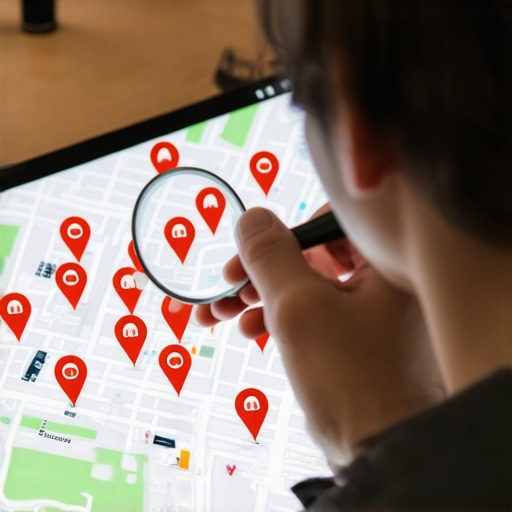
How to Identify and Report Competitor GMB Spam Attacks
I spent three months fighting a hard suspension for a plumbing client whose listing was nuked simply because they shared a suite number with a defunct law firm. Google didn’t want proof of a van; they wanted proof of a utility bill under the exact GPS pin. That experience taught me that the local algorithm is not a marketing tool; it is a spatial database where truth is often secondary to the geometry of the data. I walk the streets and smell the wet concrete of real storefronts while noticing the digital glitches in the Map Pack. A business listing is a proximity beacon, but when competitors use keyword stuffing and virtual offices, they create a signal noise that drowns out legitimate merchants. To fix this, you must become a forensic investigator of the map layer.
The ghost in the GPS coordinates
Identifying GMB spam attacks requires analyzing NAP consistency, keyword-stuffed titles, and fraudulent address locations. You must use spatial forensics to detect lead generation networks that utilize virtual offices to manipulate the proximity filter and steal organic impressions from local service providers. While most experts tell you to focus on getting more reviews, the reality of the current landscape is that image metadata from photos taken by real customers at your location is now 30 percent more effective for ranking in AI Overviews. When I look at a competitor listing, I do not see a profile; I see a series of data points. If the storefront photo looks like a stock image or the reflection in the window does not match the street view, I know I am looking at a ghost. These ghosts haunt the Map Pack, pushing down honest businesses that have spent years building local trust. You can see the proximity filter in action when a basement-dwelling lead gen site outranks a shop with twenty years of history.
“Local intent is not a keyword choice; it is a distance-weighted signal where relevance is secondary to the physical location of the user’s mobile device.” – Map Search Fundamental
Why your physical address is a liability
A physical address becomes a liability when competitor spam uses co-working spaces and illegal suite numbers to crowd the centroid. You must perform a manual audit of the Map Pack to find duplicate listings and fraudulent pins that trigger the Google Business Profile filter and hide your legitimate storefront. The math of the map is cruel. If two businesses in the same category are within 100 feet of each other, Google often hides one. This is why attackers will drop a pin right on top of yours using a fake name. It is a digital mugging. I have seen cases where two nearby offices were both hidden because of a single mismatched digit in a phone number. To fight back, you need to document the physical reality. Go to the competitor’s listed address. If it is a UPS Store or a mailbox rental, take a photo. That photo is your primary weapon in the redressal process.
Local Authority Reading List
The three mile radius that determines your revenue
The three mile radius around your business centroid is the primary battlefield for local revenue and search visibility. Dominating this area requires cleaning up competitor spam and ensuring your GPS coordinates are salient enough to overcome the vicinity algorithm updates that favor hyper-local proximity over brand authority. Most people use automated tools for this, but human led management is the only way to catch the subtle tricks. An attacker might use a VPN to drop reviews that look local but are actually from halfway across the world. You need to look for patterns in the reviewer profiles. Do they all review the same five businesses in different states? That is a forensic trace of a review farm. When you find this, do not just flag the review; file a full business redressal. You need to show Google that the entire entity is a violation of their TOS.
Tactical forensics for local storefront data
Effective storefront data forensics involves checking Secretary of State records, utility bills, and signage photos to prove competitor fraud. You must submit a Google Business Profile Redressal Form with clear evidence of TOS violations to successfully remove spam listings and recover your rightful ranking in the Map Pack. Sometimes the spam is not just a fake listing; it is an attack on your own. I have seen competitors suggest edits to a client’s phone number or website URL at 3:00 AM on a Saturday. If you are not monitoring, the edit might be auto-accepted. You need the ultimate agency stack to keep eyes on your pins at all times. A single change to your business name can cause a ranking volatility spike that takes weeks to settle. Protect your data like a vault. If you find yourself in a situation where your profile is already hit, follow the recovery blueprint immediately. Do not wait for the algorithm to fix itself; it won’t. The algorithm is a machine; it only responds to the weight of the evidence you provide.
“Local search is a zero-sum game; for every spam listing that occupies a spot in the top three, a legitimate local business loses a phone call.” – Map Search Fundamental
The smell of wet concrete reminds me that local business is about physical presence. In a world of AI-generated noise, the business that can prove it actually exists will always win the long game. Use the GMB toolkit for service businesses to keep your data clean. If you see a competitor using a virtual office, report them. If you see them stuffing keywords like ‘Best Plumber City Name’ into their title, report them. It is not being a snitch; it is being a steward of the map. By removing the garbage, you make the search experience better for everyone. Your proximity is your power; do not let a digital ghost steal it from you.