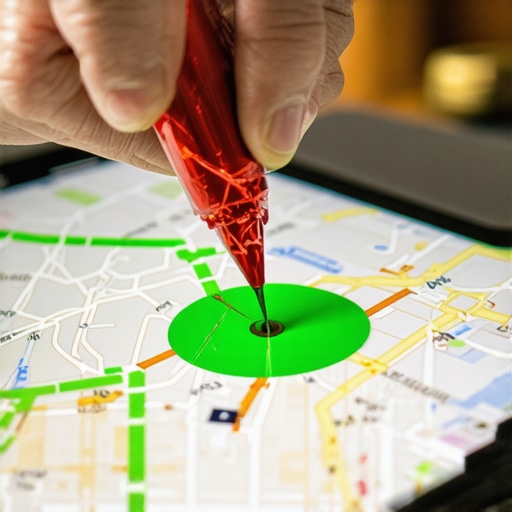
The sidewalk outside the office smells like wet concrete and exhaust. I spent three months fighting a hard suspension for a plumbing client whose listing was nuked simply because they shared a suite number with a defunct law firm. Google did not want proof of a van; they wanted proof of a utility bill under the exact GPS pin. That was the moment I realized the local algorithm is not a search engine anymore; it is a spatial investigator with a chip on its shoulder. When you see your ranking vanish, it is rarely a coincidence. It is usually a trace of grainy data that finally triggered a filter. You have to look at your business profile through the lens of a street photographer, noticing every glitch and every mismatched pixel in your digital storefront. Fixing this requires more than a support ticket. It requires a forensic reconstruction of your local authority.
The ghost in the GPS coordinates
To rebuild trust after a spam flag, you must provide verifiable proof of physical existence including utility bills, storefront signage, and consistent GPS metadata. Google requires a clear connection between your legal entity and the precise latitude and longitude of your operation to resolve proximity conflicts and remove suspension filters. The pin on the map is not just a marker; it is a proximity beacon that must align with every other signal you send into the web. If you are struggling with a sudden disappearance, you should learn why your map ranking just vanished and how to get it back by looking at the coordinates first. Often, a small shift in where your business is anchored can trigger a chain reaction. I have seen businesses lose everything because their mobile pin was three feet off from their registered address. The algorithm views this as a deceptive tactic. You have to be precise. You have to be real.
Why your physical address is a liability
Shared office spaces and virtual addresses are now high risk assets that frequently trigger permanent business profile suspensions. Google prioritizes dedicated entrances and permanent signage, viewing any shared suite or P.O. box as a potential lead generation scam designed to manipulate the map pack through artificial proximity. The era of renting a desk just to get a pin in the next town is over. You might wonder why google doesnt trust your business address anymore, but the answer lies in the thousands of ghost locations created by aggressive marketers. If you are in a coworking space, you are already behind the curve. You need a dedicated lease and a door that clearly states your name. I have walked past dozens of these buildings where the lobby directory is the only evidence of a business. Google knows this. They use Street View data and user reports to verify the physical truth. If your address is shared, you must work harder to prove your presence is unique.
“Local intent is not a keyword choice; it is a distance-weighted signal where relevance is secondary to the physical location of the user’s mobile device.” – Map Search Fundamental
The three mile radius that determines your revenue
Local search rankings are governed by a proximity filter that restricts visibility based on the physical distance between the searcher and the business centroid. Understanding this mathematical weight allows owners to focus on local justification signals like check-ins and geo-tagged reviews rather than broad keyword stuffing. Most businesses fail because they try to rank for an entire city. The algorithm is built for the neighborhood. You should check the proximity filter why your competitor is winning the search to see how distance kills your reach. If your competitor is half a mile closer to the customer, they win. It is simple math. To overcome this, you need human trust signals that bridge the gap. Think about how a neighbor talks about a shop. They do not use high volume keywords; they talk about the street corner and the quality of the service. That is the data Google wants.
Local Authority Reading List
- How to save a suspended profile without getting ghosted by support
- Why virtual offices are getting local businesses suspended
- The proximity tracking method to see your map ranking from anywhere
- A practical guide to building a gmb toolkit that actually works
- How to clean up your address across the web to boost local trust
Forensic cleaning of the digital footprint
Reclaiming a flagged profile requires a total audit of your Name, Address, and Phone number across every major directory and citation source. Inconsistent data signals to Google that your business is unreliable, leading to a loss of trust that can only be repaired through manual data synchronization. You cannot just fix your Google profile and hope for the best. You need to be fixing your business name and phone number inconsistencies for good across the entire ecosystem. I remember an HVAC guy who had four different phone numbers listed on old yellow page sites. Google saw the conflict and assumed he was a lead generator. We had to scrub every single one. It is tedious work. It feels like cleaning a camera lens that has been dropped in the mud. But once the data is clear, the ranking returns. This is where 7 practical tools to fix your business listing errors become your best friends. They find the shadows where bad data hides.
How to step out of the algorithmic shadow
Recovery from a spam flag involves submitting a formal reinstatement request backed by photographic evidence of your physical location and legal business documentation. You must demonstrate a clean history of opening hours and operational transparency to prove to the manual review team that your listing is legitimate. The process is slow. It is frustrating. You might feel like the system is rigged against you, but it is just automated suspicion. You have to prove you are a person, not a bot. Using 4 human trust signals that stop google from ghosting your local business is the fastest way to get back in the good graces of the team. This includes things like real customer photos and detailed service descriptions that reflect actual work. If you have recently changed your model, you might need rebuilding authority after taking over a local business profile to clear out the old ghosts. The algorithm has a long memory. You have to give it a new story to tell.
“Consistency in the local ecosystem is the primary proxy for business legitimacy in an era of automated profile generation.” – Local Search Intelligence Report
The truth about automated ranking toolkits
Many automated local SEO tools fail because they prioritize mass citation volume over individual data accuracy and proximity relevance. Professional strategies now focus on manual audits and high quality location signals that software often overlooks during the initial profile setup and maintenance phase. I see people paying for software that just blasts out bad data. They ask are gmb toolkits making your seo strategy lazy and the answer is usually yes. You need to know how to spot a high quality map ranking software tool that actually understands the nuances of the local map pack. The best tools are the ones that help you find errors, not the ones that promise to build a thousand links. Link building for local is about quality and geographic relevance. If a link comes from a blog in another country, it is a negative signal. It looks like spam. You want links from the local chamber of commerce or the neighborhood news site. That is how you build a real proximity beacon.