Why Being the Closest Shop Still Doesn’t Guarantee a Top Map Spot
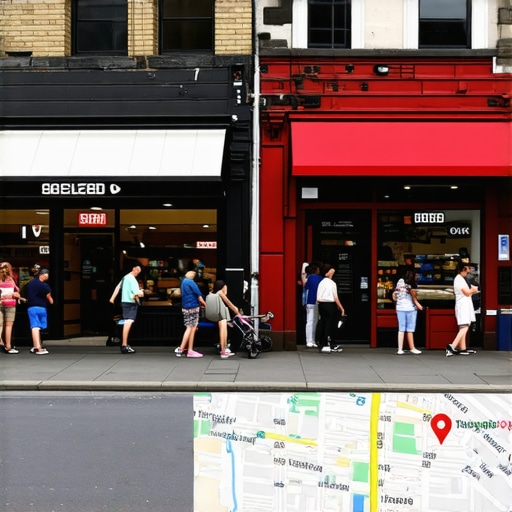
Imagine this: You are a plumber, a lawyer, or a med spa owner standing in your own lobby. You pull out your phone, open Google Maps, and search for your primary service. You expect to see your business at the very top – after all, you are literally standing inside the building. Instead, you see a competitor located three miles away occupying the #1 spot, while your business languishes in the #4 or #5 position, hidden behind the “More Businesses” button. This frustrating phenomenon is the “Proximity Paradox.” In my years as a consultant, I’ve seen thousands of profiles face this exact issue. Many business owners assume that google business profile seo is purely a matter of geography, but the reality is far more complex. While proximity is a significant factor, it is often the most “uncontrollable” element of the algorithm. In 2025 and 2026, proximity alone is no longer a shield against high-authority competitors who have mastered the art of local dominance.
The 15/25/60 Rule: Breaking Down the Local Algorithm for Google Business Profile SEO
To understand why you aren’t ranking first in your own backyard, we have to look under the hood of the local search engine. The algorithm doesn’t just look for the closest pin on a map; it looks for the best answer to a user’s query. Based on industry standards and data from MapLift, the local algorithm is generally weighted across three primary pillars: Proximity (~15%), Relevance (~25%), and Prominence (~60%).
Proximity is the physical distance between the searcher and the business. While it’s the foundation of local search, it only accounts for a small portion of the total ranking weight. Relevance measures how well your google business profile seo strategy aligns with what the user is actually typing. If a user searches for “emergency 24-hour plumber” and your profile doesn’t explicitly mention emergency services, Google will skip you for someone further away who does. Finally, there is Prominence, the “heavy hitter” of the group. Prominence is Google’s way of measuring your business’s fame and authority. It is the reason a famous steakhouse in the city center ranks for users ten miles away, while the local diner next door does not.
In the current landscape, we are seeing a massive shift. As detailed in my guide on The 2026 Local Search Pivot: How Human Intent Replaced Keyword Stuffing, Google is increasingly prioritizing businesses that demonstrate high prominence and relevance over those that are simply “close.” If you want to rank higher on google maps, you must stop relying on your physical address and start building digital authority.
Why Proximity is the “Uncontrollable” 15%
The “Proximity Trap” is a psychological hurdle for many local business owners. Because you can’t move your building every time a searcher moves their phone, proximity is essentially a fixed variable. Google’s goal is to provide a “convenient” result, but they won’t sacrifice quality for distance. If Google believes a business five miles away offers a significantly better experience than the one 500 feet away, the five-mile business wins every time.
Consider this: A dental practice 5 miles away has 500 verified, high-quality reviews with a 4.9-star average. Your practice is 500 feet from the searcher but only has 5 reviews and a 3.8-star average. Google’s algorithm is programmed to mitigate the risk of a bad user experience. It would rather “force” the user to drive an extra ten minutes than send them to a poorly rated business right next door. This is why you must Stop Checking Rankings From Your Office: The Proximity Trap in Map Tracking. When you check your rankings from your own desk, you are getting a biased view of the “proximity boost.” The real test of your google business profile seo is how you rank when the searcher is on the edge of your service area.
Relevance: More Than Just Picking a Category for Google Business Profile SEO
Relevance is the bridge between what you do and what the customer needs. Many owners think that choosing “Lawyer” as a category is enough. However, in 2025, google business profile optimization requires a much more granular approach. Google analyzes your primary category, your secondary categories, your service menu, and even the “justifications” (those small snippets of text that say “Their website mentions…”) to determine relevance.
Following the early 2025 algorithm update, Google placed significantly more weight on Name, Address, and Phone (NAP) consistency across the web. If your website says you are an “Immigration Attorney” but your Google profile says “General Practice,” you are creating a relevance gap. This gap tells Google that you might not be the specialist the user is looking for. This is why Why Picking the Wrong Primary Category Kills Local SEO Growth is one of the most common post-mortem reports I write for clients. You must align every digital touchpoint – from your website’s H1 tags to your GMB service descriptions – to reflect the specific keywords your customers use. Without this alignment, your google business profile seo efforts will stall, regardless of how close you are to the customer.
Prominence: The Secret to Outranking Closer Competitors and Mastering Google Business Profile SEO
If you want to dominate the Map Pack, you must win the Prominence game. This is where the 60% of the algorithm lives, and it’s where the most successful brands spend their budget. Prominence is built through three main channels: Review Velocity, Local Backlinks, and Brand Mentions. If you are looking for a google maps ranking service, they should be focusing heavily on these signals.
- Review Velocity & Sentiment: It’s not just about the total number of reviews; it’s about how fast you are getting them (velocity) and what people are saying (sentiment). Google’s AI now reads reviews to understand the context of your service. If your reviews frequently mention “fast response time” or “best Botox in Dallas,” Google uses those as ranking signals. This makes review management seo a core part of your strategy.
- Local Backlinks: Links from local newspapers, chamber of commerce sites, and local blogs act as “votes of confidence” for your physical location. They tell Google that you are a pillar of the local community.
- Brand Mentions: Google crawls the entire web. If your brand is mentioned on high-authority sites – even without a link – it builds your prominence score.
I recently worked with a client who saw a massive dip in their rankings. We discovered it wasn’t a proximity issue, but rather a lack of engagement. As I noted in How We Fixed a Local Ranking Drop Caused by Generic Review Responses, moving from “Thank you for the review” to keyword-rich, helpful responses significantly boosted their prominence. To scale this, many professionals use local seo tools to track how their brand authority compares to competitors in the same zip code.
2026 Algorithm Shifts: Human Signals & AI Filters
As we move into 2026, the google business profile seo landscape is shifting away from static data and toward dynamic “human signals.” Google is now utilizing store-visit data and “walking paths” to determine which businesses are actually popular. If Google sees that 100 people a day walk into a competitor’s shop but only 5 walk into yours, the competitor will eventually outrank you, even if they are further away.
The August 26, 2025 Spam Update was a watershed moment for the industry. Lasting approximately 26 days, this update aggressively targeted low-quality local signals and fake listings. Google’s AI filters are now sophisticated enough to detect “engagement botting” and fake reviews. Instead of trying to “game” the system, focus on real-world signals. In my article How Customer Walking Paths Drive Your 2026 GMB Ranking, I explain how mobile device density around your location acts as a real-time prominence signal. Remember, 76% of local searches happen on mobile devices, and Google tracks the “last mile” of the customer journey. If people search for you and then actually navigate to your store, that is the ultimate ranking signal.
Common Mistakes That Kill Your Map Ranking
Even with a great google business profile seo strategy, simple technical errors can tank your visibility. Here are the most common “don’ts” I see in the field:
- Wrong Map Pin Location: If your pin is even 50 feet off (e.g., in the middle of a parking lot instead of the front door), it can confuse the proximity algorithm.
- Overlapping Service Areas: Setting a service area that is too broad (e.g., the entire United States for a local plumber) dilutes your local relevance.
- Using Cheap SEO Packages: I cannot stress this enough – avoid the $99/month “guaranteed ranking” services. As I discussed in The Brutal Reason Those Cheap SEO Packages Never Show Up on Google Maps, these cheap seo packages often use black-hat tactics that lead to permanent profile suspensions.
- Inconsistent NAP: Having different phone numbers on Yelp, Facebook, and your GMB profile creates “data friction” that lowers your trust score.
Conclusion: Taking Control of Your Local Visibility
While you cannot control where your searcher is standing, you have total control over your relevance and prominence. Being the “closest” shop is a head start, but it isn’t the finish line. To truly dominate the Map Pack in 2026, you must treat your profile as a living entity. Focus on high-velocity reviews, perfect your category alignment, and build real-world authority. If you are unsure where you stand, I recommend performing a comprehensive google business profile audit or using professional local seo software to benchmark your prominence against the competition. Don’t let a competitor three miles away steal your customers just because they played the algorithm better than you.